
"Will my customers know it's a robot?" is the first thing almost everyone asks before putting an AI on their phone line. It's the right question. We build AI voice agents, so treat this skeptically: below is an honest look at how human AI voices actually sound on a call in 2026, the engineering that decides it, and the specific moments where they still give themselves away.
Our articles are still written by humans!
Get human written articles in your Google feed.
The short answer
Yes - in 2026, a well-built AI voice agent sounds convincingly human on a typical business call, and a large share of callers won't consciously notice. The voice itself (the actual audio) crossed the "good enough" line a while ago. What still separates AI from human is rarely the sound and almost always the conversation: how fast it replies, whether it lets you interrupt, and how it handles the messy, unscripted middle of a real call. Get those right and the illusion holds; get them wrong and a perfect voice still feels like a machine.
What actually changed in 2026
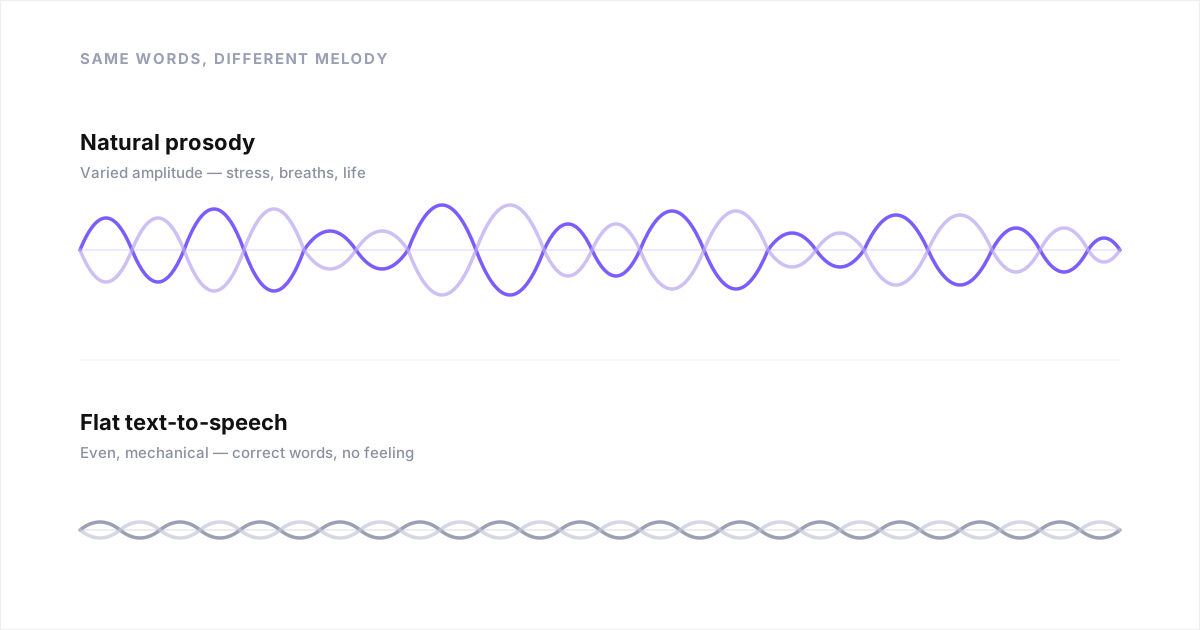
For a decade, "text-to-speech" meant the flat, evenly-paced voice of a GPS or an old phone tree. It pronounced words correctly but had no prosody- the rise and fall, the stress, the tiny hesitations that carry meaning and emotion in human speech. That's the voice everyone pictures when they hear "AI on the phone," and it's why the question in this article's title exists at all.
Modern neural voices changed the baseline. They model the melody of speech, not just the words, so they land emphasis in the right place, take audible breaths, drop in a natural "um," and shift tone with the sentence. (Our own voices run on ElevenLabs, our voice partner, which is one of the labs that pushed this quality forward.) The result is that the raw audio is no longer the weak link. Which is exactly why the interesting failures moved somewhere else - into timing and turn-taking, the subject of most of this guide.
What actually happens during an AI voice call
To understand where the human-ness lives, it helps to see the pipeline. When you speak to an AI voice agent, three things happen in a loop, many times a second:
- Speech-to-text (it hears you).Your audio is transcribed in real time, while you're still talking, so the system can tell when you've finished a thought.
- The model (it thinks). A language model reads what you said, plus the context of your business and the call so far, and decides what to say next - including whether to book, answer, or hand off.
- Text-to-speech (it speaks). The reply is turned into natural audio and streamed back to you, ideally starting before the whole sentence is even generated.
Every one of those steps costs time, and time is the enemy. Human conversation runs on astonishingly tight timing: research across ten languages found the typical gap between one person finishing and the next starting is around 200 milliseconds - faster than you can consciously react, because we predict the end of each other's sentences. No full AI pipeline hits 200 ms yet. The art is getting close enough that your brain forgives it.
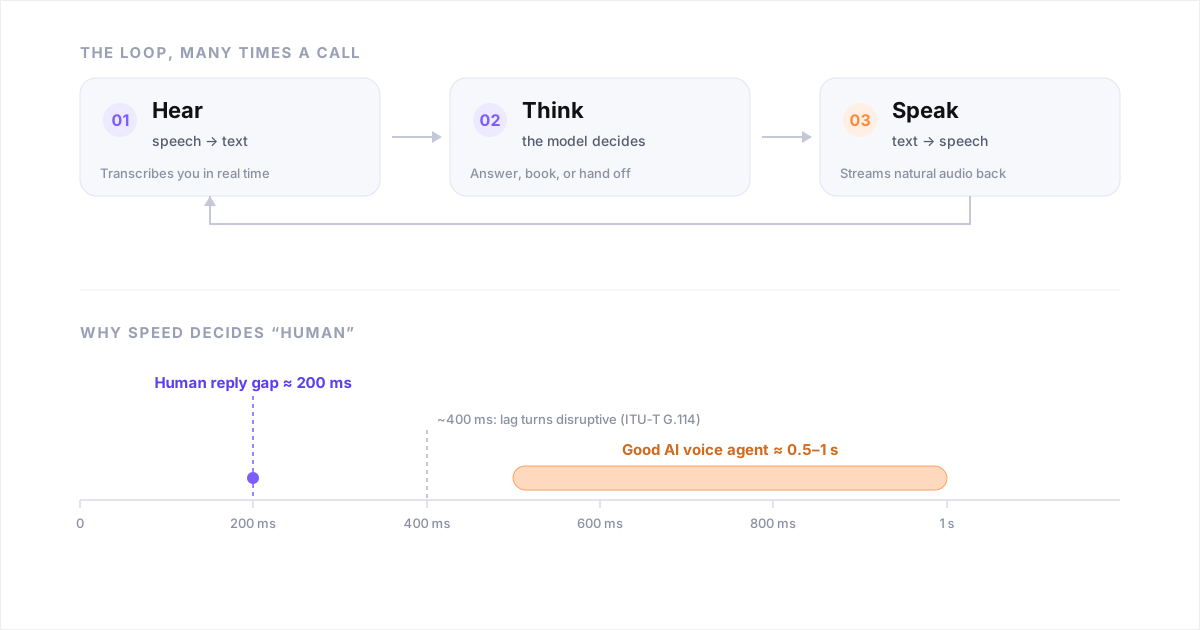
For reference, the telecom world has known for decades that delay breaks conversation. The ITU's G.114 standard treats one-way latency up to about 150 ms as unnoticeable, 150-400 ms as increasingly awkward, and beyond 400 ms as genuinely disruptive - and that's just network delay, before the AI has thought about anything. Good voice agents land their full response in roughly half a second to a second, which most people accept. Past a second of dead air before everyanswer, callers start to feel they're talking to a machine, no matter how lovely the voice is.
The four things that actually make a voice sound human
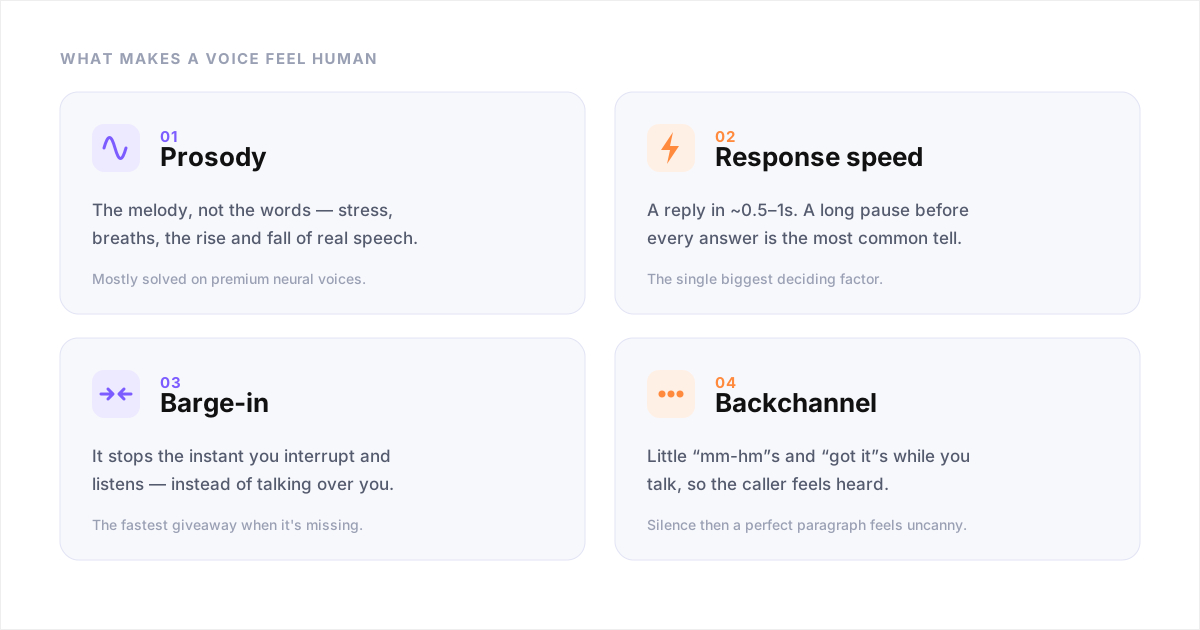
If you only remember one section, make it this one. These are the four levers, roughly in order of how often they're the deciding factor:
1. Prosody - the melody, not the words
Prosody is the rise and fall, the stress, the rhythm. It's the difference between "great, that works" and a flat "great that works." Cheap voices get the words right and the music wrong, and the ear notices instantly even if it can't name why. This is mostly solved on premium neural voices in 2026 - but it's still the first thing that betrays a budget setup.
2. Response speed - the half-second that decides everything
As above: a beat of silence before each reply is the single most common tell. A great voice that pauses two full seconds before every answer feels more robotic than a mediocre voice that answers right away. When you test a vendor, time the gap after you stop speaking. If it's consistently long, nothing else will save the call.
3. Barge-in - letting you interrupt
Real people interrupt. They cut in with "actually, it's for next Tuesday" before you've finished offering this week. A human voice agent stops talking the instant you start, listens, and adjusts. A weak one plows through its scripted sentence while you're already speaking, or talks over you. Barge-in is the feature name, and its absence is one of the fastest giveaways that you're not talking to a person.
4. Backchannel - the little "mm-hm"s
Humans signal they're listening with tiny sounds - "mm-hm," "right," "got it" - and short acknowledgements before the full answer. Silence while you talk, followed by a perfect paragraph, feels uncanny. The better agents drop in these small signals, which buys time for the pipeline and, more importantly, makes the caller feel heard.
What pushes a phone voice toward 'human' vs 'machine'
| Signal | Feels human | Feels like a machine |
|---|---|---|
| Prosody | Natural stress, breaths, varied pace | Flat, evenly-spaced, no emphasis |
| Response speed | Replies in ~0.5-1s, fairly consistently | A long, identical pause before every answer |
| Interruptions (barge-in) | Stops instantly when you cut in, adjusts | Talks over you or finishes its scripted line |
| Backchannel | Small 'mm-hm', 'got it' while you speak | Dead silence, then a too-perfect paragraph |
| Recovery | Handles a confusing answer, asks a clarifying question | Repeats the same line or loops back to the menu |
Where AI voices still slip (and you should know it)
Against our own interest, here's where even good 2026 voice agents are still catchable - and where you shouldn't pretend otherwise:
- The unscripted middle.A clean "book me a haircut" call is easy. The call where someone rambles, changes their mind twice, and asks something oddly specific is where the seams show. The voice stays perfect; the handling can wobble.
- Real emotion. An upset, grieving, or anxious caller wants to feel met by a person. A polite, well-modulated AI is not the same thing, and they can usually feel the difference even if the audio is flawless. These calls should hand off to a human early.
- Crosstalk and chaos. Two people talking, a baby crying, a bad connection, heavy background noise on a job site - humans filter this effortlessly; speech-to-text degrades, and the agent can mishear or stall.
- The rhythm tell. Over a longer call, the timing can feel slightly too even - every reply arriving with the same small delay. Humans are messier: we speed up, trail off, jump in. That uniformity is the subtle thing a careful listener eventually notices.
How to test a voice agent in five minutes
Don't trust a demo reel; trust your own ears on a live call. Phone any vendor's AI (including ours) and run this quick gauntlet:
- Time the pause. After you stop talking, count the silence before it replies. Consistently over a second is a problem.
- Interrupt it.Start talking while it's mid-sentence. Does it stop and listen, or plow on? This one test sorts the good from the cheap fast.
- Be a little messy. Change your mind, mumble a date, ask something slightly off-topic. Watch whether it recovers gracefully or loops.
- Listen for life. Are there breaths, varied pace, small acknowledgements? Or is it flat and evenly spaced?
- Push toward an action.Try to actually book something. The point of a voice agent isn't to chat - it's to finish the job on the first call.
If you want a fuller buyer's framework beyond the voice itself, our guide to choosing an AI receptionist covers integrations, escalation, and pricing traps.
Should you tell callers it's an AI?
Short answer: yes, briefly, up front. There are two reasons, and both matter.
The legal one.Disclosure rules are tightening and they vary by region - several U.S. states and other jurisdictions now require you to tell people they're interacting with AI, particularly on outbound or sales calls, and the direction of travel is clearly toward more disclosure, not less. The spirit of the FTC's guidance on clear and conspicuous disclosure applies here too: don't design something to mislead.
The trust one. This is the bigger point. A caller who finds out afterthe fact that they were fooled feels manipulated, and that's a worse outcome for your brand than them simply knowing. A natural line like "Hi, you've reached Jordan's AI assistant - I can book you in right now" sets honest expectations and, in practice, callers happily keep going because the call is fast and useful. The quality of the voice earns trust; the disclosure protects it.
The bottom line
Do AI voices sound human on the phone in 2026? On the calls that make up most of a business's day - bookings, hours, quick questions, routine intake - yes, convincingly so, to the point where the honest thing is to disclose it rather than rely on callers not noticing. The remaining tells aren't in the audio; they're in timing, interruptions, and the unscripted edges, and they're exactly what a good system is engineered around and a cheap one ignores.
So judge a voice agent the way your customers will: not by a polished demo, but by a real, slightly awkward phone call. If it answers fast, lets you cut in, recovers when you ramble, and actually gets you booked - it'll feel human enough to do the job, which is the only test that matters. For the wider picture of what AI can and can't take off your plate, see whether an AI receptionist can replace a human, then hear our AI receptionist and try it on a live call and trust your own ears.
Frequently asked questions
Do AI voices sound human on the phone?
In 2026, on a short, routine call, most callers can't reliably tell. Modern neural voices have natural intonation, breaths, and filler words, and a good system replies fast enough to feel like a real conversation. The giveaways are subtle: a slightly-too-even rhythm, a beat of delay before each answer, and trouble with messy interruptions. On a longer or emotional call, a careful listener will usually start to suspect.
Why do some AI phone voices still sound robotic?
Two reasons. First, cheaper text-to-speech still has flat prosody - the melody and stress of real speech - so it reads sentences correctly but without feeling. Second, and more often, the voice itself is fine but the system is slow: a long pause before every reply breaks the rhythm of conversation and reads as 'machine' even when the audio is excellent. Good voice agents fix both.
How fast does an AI voice agent need to respond to sound natural?
Human conversation runs on remarkably tight timing - the typical gap between turns is around 200 milliseconds. No full AI pipeline (hearing, thinking, speaking) hits that yet, but the best systems respond in roughly half a second to a second, which most people accept as natural. Past about a second of dead air before every answer, the call starts to feel like talking to a machine.
Can an AI voice handle being interrupted?
The good ones can. The feature is called 'barge-in': you start talking, the AI stops mid-sentence and listens, the way a person would. Without it, the AI talks over you or finishes its scripted line while you're already speaking, which is one of the fastest ways to tell you're not talking to a human. Always test interruptions before you trust a voice agent.
Is it legal to use an AI voice that sounds human on calls?
Generally yes, but disclosure rules are tightening and vary by region - some U.S. states and other jurisdictions require you to tell people they're talking to an AI, especially for outbound or sales calls. Beyond the law, a brief 'this is an AI assistant' up front costs you almost nothing and protects trust. Hiding it to fool callers is the risky path, both legally and reputationally.