
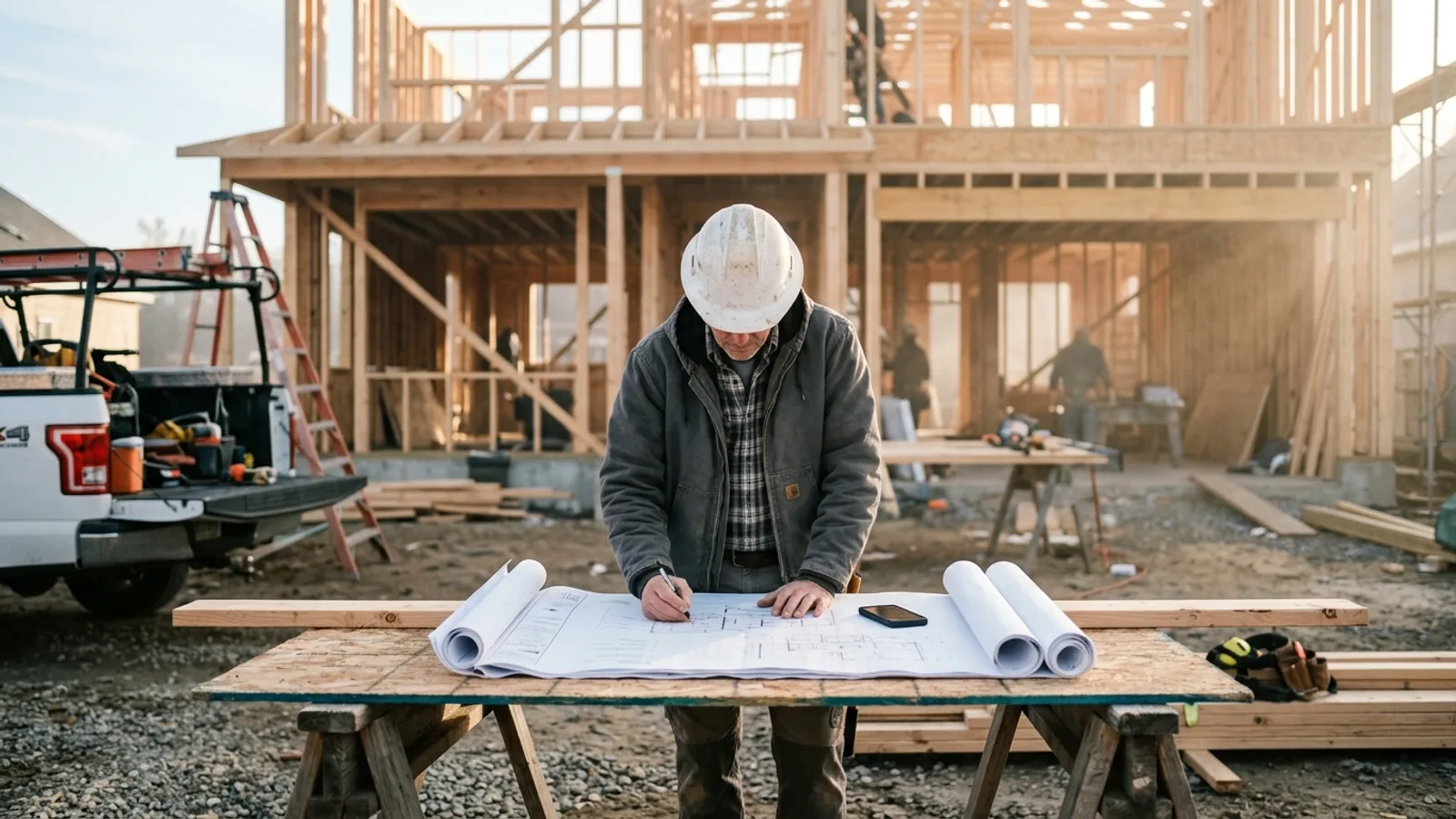
A contractor's phone has a paradox built in: the better your business is doing, the worse it gets answered. Busy sites, full crews, and back-to-back estimates mean the call from the next $60,000 project rings against a nail gun and goes to voicemail - where, politely, it dies. A contractor answering service exists to break that ceiling. We build the AI kind, so read this with appropriate skepticism: here's what it actually does, the call-routing problem that makes construction different, and where a human still wins.
Our articles are still written by humans!
Get human written articles in your Google feed.
The short answer
A contractor answering serviceanswers your line when you can't: on-site, mid-pour, in a bid review, or on a Saturday when the homeowners finally have time to call about the kitchen. It asks the one question that sorts construction calls - new project, existing job, or sub/supplier - then qualifies new leads properly, books estimate visits into your real calendar, routes existing-client calls by your rules, and texts you a clean summary of everything. Live operators, an AI receptionist, or a hybrid can all staff it; for most residential GCs and remodelers the hybrid shape wins, with AI absorbing volume and a human taking the delicate calls. This guide sits alongside our trade-specific ones - roofing, plumbing, and HVAC - and the home-services overview covers the whole field.
Why contractors miss calls (structurally)
- The job site owns you.You're running a crew, walking an inspector through rough-in, or on a ladder with both hands committed. Site noise makes half the answered calls useless anyway - you can't qualify a remodel lead over a circular saw.
- There's no one left at the desk. The AGC's 2025 workforce survey found the overwhelming majority of construction firms have open positions they can't fill, and most report project delays from shortages. When every capable person is producing on-site, the office phone is the first casualty.
- Leads call on your worst hours. Homeowners research contractors at night and call in the evening or on Saturday morning - outside the hours anyone is near the business line.
- And they're calling your competitors in the same sitting. A homeowner soliciting bids works down a list of three or four names. The HBR lead-response research showed contact odds collapse within an hour; for a comparison shopper with a list, the window is one voicemail greeting.
What a missed bid call costs
Construction has long sales cycles and big tickets, which cuts both ways: you don't need many leads, but each one is worth a lot, and each miss is expensive in a way that never shows up in a report. A bathroom remodel is a five-figure project; an addition or a custom build is six. Miss one qualified bid call a month and the annual cost of that leak is more than most firms' entire marketing budget - and unlike a lost bid, a lost call never even tells you it happened. We walk through the arithmetic in the cost of a missed call; with contractor ticket sizes, it stops being a rounding error very fast.
The contractor call mix (why generic services fail)
What makes construction different from, say, a dental office is that a new customer is a minority of your inbound calls. On one number you get:
Who actually calls a contractor's line
| Caller type | What they need | Right handling |
|---|---|---|
| New project lead | A conversation, confidence, and a site-visit time | Full qualification + estimate booked - the reason the service exists |
| Existing client | An update, a concern, sometimes a complaint | Escalate per your rules - project clients should reach a human fast |
| Subcontractor / crew | Schedule, site access, scope questions | Message routed to the PM or super, not mixed into the lead pile |
| Supplier / delivery | Confirmations, delays, backorders | Message with job name attached, routed to whoever ordered |
| Inspector / official | Scheduling, access | High priority message or transfer - never lost in the pile |
| Solicitor | Your time | Politely ended; never forwarded |
A generic message-taking bureau treats all six the same and hands you an undifferentiated pile every evening. A service configured for contractors asks the sorting question first and treats each stream differently - which is most of what you're actually paying for.
What a contractor answering service actually does
- Answers every call instantly - including the three that arrive together at lunch, when a single office line would ring busy.
- Sorts the call mix with the new-project / existing-job / sub-supplier fork before anything else.
- Qualifies new leads properly - the section below covers what that means in construction.
- Books the estimate into your calendar with a confirmed slot and a text confirmation to the caller. (How the calendar connection works is covered in this answer on appointment booking.)
- Texts you summaries you can run the business on: "New lead: kitchen remodel, Maple Grove, wants to start fall, estimate booked Sat 9 a.m." versus "ABC Supply: trusses delayed to Thursday, Hendricks job."
Qualifying a project lead (without scaring it off)
Construction lead qualification is a balance: enough detail that your estimate visit isn't wasted, not so much interrogation that a homeowner making her third call of the evening gives up. The workable minimum:
- What and where.Project type and property location - the two facts that decide whether it's even your kind of work and your service area.
- Timeline."Hoping to start this fall" versus "getting ideas for someday" - the single best seriousness filter, asked without pressure.
- Scope signals, gently.Full gut or cosmetic? Plans or architect involved? These calibrate the visit without asking "what's your budget?" cold on a first call - a question that loses more leads than it qualifies.
- The booking. A concrete site-visit slot, offered from your real calendar. This converts the call from an inquiry into a commitment.
Configure the script to capture, not filter. The AI's job is to hand you a well-documented lead, not to decide which projects deserve you - a "small" deck call is sometimes a whole-house client testing you with a starter project.
Live agents vs AI vs hybrid
Answering service models for contractors
| Model | Best fit | Watch out for |
|---|---|---|
| Live human operators | Firms with commercial clientele who insist on a person, low volume | Per-minute pricing; generic operators who can't sort a sub from a lead, so you still get a message pile |
| AI receptionist | Residential GCs and remodelers with heavy voicemail leakage and evening/weekend lead flow | Needs the call-mix fork and qualification script configured; commercial VIPs need a fast human path |
| Hybrid (AI first, human backup) | Most growing firms: AI sorts and books everything, humans take existing-client and commercial calls | Define the handoff triggers precisely - project clients, disputes, anyone who asks for a person |
Whichever model, keep your number - forwarding rules handle everything, as covered in this answer on keeping your existing number. Cost comparisons across the whole market are in our answering service cost guide, and our own flat rates are on the pricing page.
What good calls sound like
The Saturday remodel lead
The supplier call (routing, not selling)
Two different calls, two completely different handlings, one number. That fork is the product.
Where AI loses (and should stand down)
- Bids, scope, and change orders. Anything with a dollar figure attached to a promise is yours. The AI can state that estimates are free and ranges depend on the site visit - never improvise numbers.
- Existing-client friction. A client three weeks into a kitchen with a concern needs a human voice that day. Route these to a person by rule, not by luck.
- Technical judgment. Whether a wall is load-bearing or a permit is needed is not a phone conversation for a robot. Capture the question; let the builder answer it.
- Undisclosed AI.Construction runs on trust and referrals. A short "this is the AI assistant" up front costs you nothing; callers mostly can tell anyway, and getting caught hiding it costs reputation.
Setting it up
- Forward after-hours, weekends, and on-site overflow first. These calls are hitting voicemail today; the change is pure upside and gives you a week of transcripts to judge.
- Write the fork and the routing table. The call-mix table above is the template: who gets booked, who gets routed where, who gets a human immediately. Include your active job names so messages arrive pre-sorted.
- Connect scheduling you actually keep. If estimates live in your head, put them in a shared calendar first - the booking feature is worthless against a calendar nobody maintains.
- Review transcripts weekly for the first month. Tighten the qualification wording, add jobs to the routing list, and check the leads it booked against the ones you'd have wanted. Judge it on booked site visits, not the demo.
The decision test is blunt: if your line goes to voicemail on evenings, weekends, and whenever you're on a site - which for most contractors is most of the time - you already know the leak is there. See how the AI receptionist works for home-services and trade businesses, check pricing, and judge it on your own calls.
Frequently asked questions
What is a contractor answering service?
A contractor answering service answers your business line when you can't - on a job site, in a bid meeting, or after hours. It captures new project inquiries with enough detail to be useful (project type, location, timeline, budget signals), sorts them from subcontractor and supplier calls, books estimate appointments into your calendar, and texts you a summary. It can be staffed by live operators, an AI receptionist, or a hybrid.
How much does a contractor answering service cost?
AI-based services typically run about $30 to $300 a month flat; live operator services bill per minute, usually $1 to $3.50, which lands at several hundred a month for modest volume. The comparison that matters is against the work: for a remodeler or GC whose average project runs five figures, a single bid call captured instead of lost to voicemail pays for the service for years.
Can an answering service tell a new lead from a subcontractor or supplier call?
Yes, if it's configured to ask. The first fork in a contractor call script is simple: are you calling about a new project, an existing job, or are you a sub or supplier? New leads get the full qualification and an estimate booking; subs and suppliers get a message taken and routed to the right person; existing clients get escalated per your rules. Without that fork, you get a message pile where a $60,000 remodel lead sits under three material delivery updates.
Can it book estimates into my calendar?
A good one can - connected to Google Calendar, Jobber, Buildertrend, or whatever you actually run scheduling on, it reads live availability, offers the caller real slots, books the site visit during the call, and texts a confirmation. That last step matters more in construction than most trades: homeowners are usually calling three contractors, and the first firm slot on a calendar has a way of ending the search.
What about commercial clients and developers - will they talk to an AI?
Some won't, and your setup should respect that. The honest pattern is disclosure plus a fast path to a human: the AI answers instantly, identifies itself, and for callers who ask for a person - or match your VIP list - transfers or pages immediately. What commercial callers reliably hate more than a disclosed AI is a voicemail box, because it tells them nothing about when they'll hear back.
Do contractors need 24/7 answering?
Nights matter less than for plumbers, but evenings and Saturdays matter enormously - that's when homeowners have time to finally make the calls about the kitchen. Those are exactly the hours your phone goes to voicemail. Most contractors start with after-hours, weekend, and on-site overflow forwarding, which captures the highest-value missed calls without changing anything about how the office works during the day.