
In legal services, the firm that answers first usually signs the client. Someone who was just in an accident or arrested finds three firms online, calls the first, gets voicemail, and dials the next before you hear the message. The uncomfortable part is how common that is: in Clio's research, fewer than half of firms even answered the phone. A law firm answering service exists to close that gap. We build the AI kind, so read this skeptically: below is an honest look at what it does well, where an attorney's judgment and your ethics rules take over, and how to deploy it without straying anywhere near the unauthorized practice of law.
Our articles are still written by humans!
Get human written articles in your Google feed.
The short answer
A law firm answering service answers your calls when no one at the firm can, captures and qualifies the potential client, and either books a consultation or hands you a clean intake. It can be run by live operators, by an AI receptionist, or a hybrid - the differences between the three models matter more for law firms than most, and we've compared them honestly. For most solo attorneys and small firms, an AI service handles the high-volume routine intake around the clock for a flat monthly fee: new-matter inquiries, after-hours calls, basic questions about practice areas, then escalates an emergency or anything sensitive to a person. It is not there to give advice or replace your judgment. It exists to stop leaking prospective clients to voicemail while you're in court, in a deposition, or asleep.
What a missed call actually costs a firm
Most businesses can call a lead back in an hour. A law firm often can't, because the caller is shopping several firms at once and intent is perishable. The data is bleak: in Clio's Legal Trends research, only 40% of firms answered the phone in 2024, down from 56% five years earlier, leaving roughly half of firms effectively unreachable. The classic Harvard Business Review research on lead response time found the odds of even reaching a lead collapse within the first hour. A prospective client who reaches your voicemail does not wait around; they hire the firm that picked up.
Now put a number on it. A single missed call isn't a missed conversation, it's a missed matter: the personal-injury case, the estate plan, the business dispute, the divorce. One signed client is worth far more than a year of any answering service. Miss a handful of intake calls a month and you have quietly handed competitors more revenue than the service would cost for a decade. The one that simply answers pays for itself on the first case it keeps.
What a law firm answering service actually does
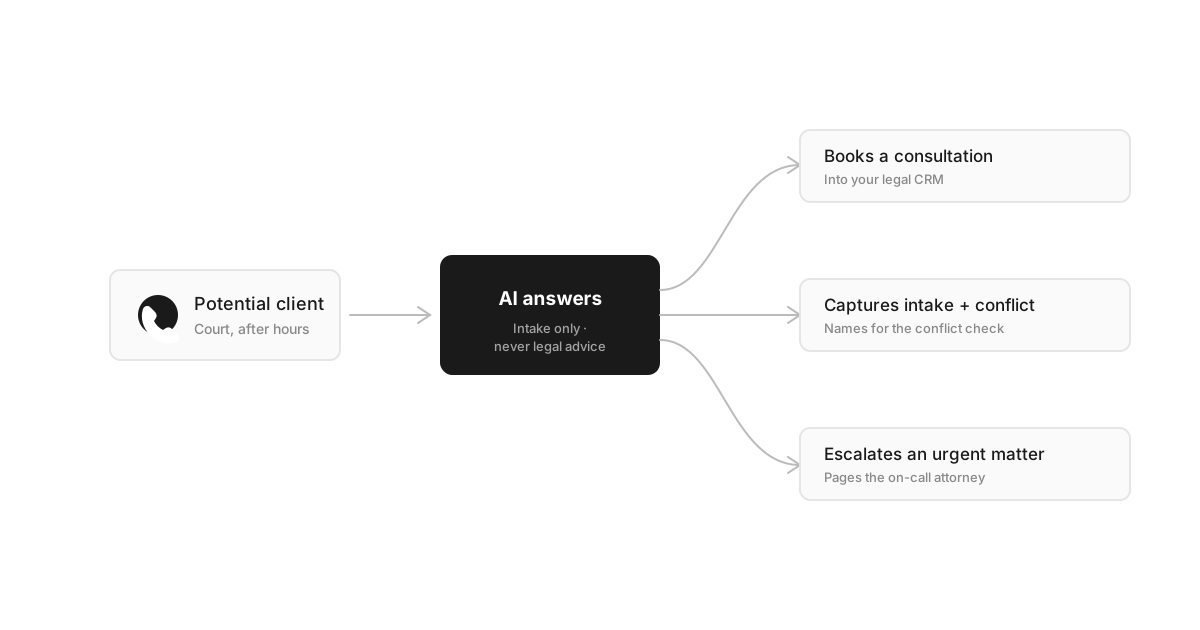
Strip away the marketing and a good service does five concrete things on a call:
- Answers every call instantly, including the after-hours and overflow calls that arrive while you're in court, with a client, or off the clock.
- Runs structured intake: name, contact details, the type of matter, the jurisdiction, what happened, and how urgent it is, so you inherit a complete picture instead of "call this guy back."
- Captures conflict-check information: the names of the parties involved, so you can run a proper conflict check before you ever form a relationship. The AI gathers the names; it does not clear the conflict.
- Books or escalates: schedules a consultation into your calendar, or, for a genuine emergency like an arrest, pages the on-call attorney instead of leaving it until morning.
- Hands you a usable summary, dropped into your legal CRM the moment the call ends, so you follow up from a clean intake rather than replaying a voicemail.
Why a law firm is a natural fit for AI
Some businesses are awkward for an AI receptionist. A law practice is one of the more natural fits, for structural reasons:
- You are routinely unreachable. Court, depositions, closings, and client meetings take you off the phone for hours at a time, which is exactly when prospective clients call. An AI answers through all of it.
- So much intake happens after hours. Arrests, accidents, and emergencies cluster at nights and on weekends, precisely when no one is at the firm. A 24/7 answer is worth more in legal intake than in almost any other professional service.
- The intake is structured and repetitive. Practice area, jurisdiction, the parties, the basic facts, the timeline. That predictable frame is exactly what AI does well, and it runs the same disciplined intake on every call instead of a rushed version between hearings.
- The first impression carries weight.A calm, attentive answer at the worst moment of someone's week builds trust before an attorney ever picks up, instead of a voicemail box that signals nobody is home.

Features that actually matter (and what's noise)
Every vendor lists a dozen features. For a law firm specifically, these are the ones that decide whether you'll be glad you bought it:
Hard guardrails against legal advice
The highest-stakes feature, and the one most vendors gloss over. The assistant must be built so it cannot give advice, predict an outcome, or state a deadline or limitations period. It captures facts and books a consult, full stop. An assistant that ad-libs "you probably have a good case" is a liability, not a feature.
Structured intake by practice area
A car-accident call and a probate call need different questions. The service should run the right intake template for each matter type and collect the facts an attorney actually needs to evaluate it, so the consultation starts from a real picture rather than a blank page.
Conflict-check capture, not conflict clearance
It should reliably collect the names of the parties involved so you can run a conflict check, and it should make clear it is only scheduling, not accepting the matter. The AI gathers; you clear. Blur that line and you risk a conflict slipping through intake.
Legal CRM and calendar integration
The intake should land in the tool you already run on, Clio, MyCase, Lawmatics, or similar, automatically. A service that emails you a transcript you then retype into your system is creating work, not removing it.
Confidential, secure handling
Callers share sensitive facts, so the service must keep them confidential and secure: encryption in transit and at rest, and a vendor that won't train external models on your intake. Under the ABA's 2024 guidance, that confidentiality is your responsibility, not the vendor's to promise away.
Live agents vs AI vs hybrid
There are three ways to staff a legal answering service, and the right one depends on your matter mix and how often you're genuinely unreachable. Be honest about how many intake calls you actually miss.
Answering service models for law firms
| Model | Best fit | Watch out for |
|---|---|---|
| Live human (legal intake specialists) | High-touch, complex matters and firms that want a trained person on every intake | Cost (often per-minute or premium legal rates), hold times at peak, inconsistent intake across operators |
| AI receptionist | Heavy after-hours and overflow intake, routine new-matter calls, solo attorneys and small firms | Must be guardrailed against legal advice and configured for conflict capture, confidentiality, and clean escalation |
| Hybrid (AI first, human backup) | Most growing firms: AI catches every call, a person or attorney takes the ones that need one | Slightly more setup; you must define exactly what triggers a handoff and where it goes |
For most solo attorneys and small firms, hybrid is the sweet spot: let the AI catch 100% of calls and run the routine intake, page the on-call attorney for a genuine emergency, and route anything sensitive to a person.
What good call handling actually sounds like
The quality of an answering service lives in the script. Here is the shape of three calls worth modeling, kept short on purpose, because long scripts are where AI and tired humans both go wrong.
New-matter intake (personal injury)
The after-hours emergency (escalate fast)
The "just tell me what to do" call (no advice)
The moment a call ends, you should get a one-line summary you can act on: "PI, rear-end collision 6/22, injured, opposing party J. Mills, consult booked Thu 4pm" or "After-hours arrest, Travis County, paged on-call attorney." That summary is the actual product. Everything before it is plumbing.
Where an AI service still loses (and you should know it)
Against our own commercial interest, here is where an AI answering service is the wrong tool, or a dangerous one if you're careless:
- Legal advice and the unauthorized practice of law. The AI must never advise, predict an outcome, or state a deadline. The moment it does, you have a problem that no booked consult is worth. Build it to capture facts and schedule, nothing more.
- Confidentiality and supervision. Callers disclose sensitive facts. In Formal Opinion 512, the ABA treats an AI tool much like a nonlawyer assistant you supervise, which puts the duties of confidentiality and competence on you. Choose a vendor that encrypts data and won't train external models on it, and review how it handles intake.
- Conflicts of interest. The AI can gather party names, but you must run the actual conflict check before forming a relationship. Careless intake that implies representation, or skips the names, is a real risk. Keep clearance with the attorney.
- High-stakes, emotional matters. A criminal charge, a custody fight, an abuse situation: these callers need to feel heard by a person, fast. A polite AI is not the same thing. Route them to a human early.
- Disclosure and trust.A short "this is an AI assistant" up front is the honest default, and in line with the spirit of the FTC's guidance on clear disclosure. In a profession built on trust, don't spend it to hide a robot.

How to set it up without regret
- Settle confidentiality and supervision first.Pick a vendor that encrypts call data and won't train external models on it, get a confidentiality or data-protection agreement, and decide who reviews the intake. The ABA's 2024 guidance makes this your duty, not an afterthought.
- Write the no-advice guardrails.Spell out that the AI gives no legal advice, no outcome predictions, and no deadlines: it captures facts and books a consult. Add the "this is not legal advice, no relationship formed" disclaimer it should say on every call.
- Define conflict capture and escalation. Decide exactly which party names to collect, what counts as an after-hours emergency, what pages the on-call attorney, and where everything else goes.
- Start with after-hours and overflow.Forward only the calls you're already missing to the service first. It is pure upside, and it lets you judge intake quality on real calls before you hand it the main line.
- Wire up the legal CRM and read the transcripts. Confirm intake lands in Clio, MyCase, or Lawmatics, test it with a fake call, then read the first two weeks. Check it stayed off advice, captured conflicts, and escalated correctly. Treat it like a new intake hire in training.
If most of your calls are routine intake and you're losing prospective clients after hours, the decision is straightforward. You're not outsourcing your judgment or your ethics; you're making sure the phone is always answered so you get the chance to use them. For how to evaluate any provider, see our AI receptionist buyer's guide, compare the cost of the options, and, since first impressions decide intake, read whether AI voices actually sound human. If you also handle healthcare clients or run a clinic, the same playbook for that world is in our dental answering service guide. Then see how our AI receptionist works, check the setup and pricing, and judge it on your own calls.
Frequently asked questions
What is a law firm answering service?
A law firm answering service answers calls for an attorney or firm when no one can pick up: after hours, during court or depositions, or while you're with a client. It captures the potential client, runs structured intake, takes the names needed for a conflict check, books a consultation, and flags an urgent matter. It can be run by live operators, by an AI receptionist, or a hybrid. The goal is to stop sending prospective clients to voicemail, where most of them simply call the next firm on their list.
How much does a law firm answering service cost?
AI-based services typically run from roughly $30 to $300 a month depending on call volume; live human and legal-specialist intake services usually cost more, often $1 to $3.50 per minute or several hundred dollars a month. For a firm the honest comparison isn't the monthly fee. A single signed matter, a personal-injury case, an estate plan, a business dispute, is worth far more than a year of any answering service, so capturing one extra client pays for the whole thing many times over.
Can an AI receptionist give legal advice to callers?
No, and a properly configured one is built not to. Giving legal advice or predicting outcomes would risk the unauthorized practice of law, so the AI's job is strictly intake: capture the facts, take the names for a conflict check, and book a consultation with an attorney. It should state plainly that it can't give advice and that no attorney-client relationship is formed until you meet and engage. Keeping it inside that boundary is the whole point of doing it well.
Is it ethical for a law firm to use an AI receptionist?
Yes, with supervision. In Formal Opinion 512 (2024) the ABA confirmed that a lawyer's duties of competence, confidentiality, and supervision apply when using AI tools, treating the tool much like a nonlawyer assistant you're responsible for. In practice that means understanding what the AI does, ensuring caller information is kept confidential and secure, and reviewing how it handles intake. The technology is allowed; unsupervised use is the risk.
Can an AI handle after-hours legal intake?
That's one of the best reasons to use one. Arrests, accidents, and emergencies don't keep office hours, and the caller who reaches a person at 11 p.m. often becomes the client. A 24/7 service answers instantly, captures the urgent facts, books the consultation, and for a genuine emergency pages your on-call attorney instead of leaving a voicemail that competes with every other firm the caller is dialing.
Sources
- Clio Legal Trends Report: law firms struggle to respond to client inquiries (only 40% of firms answered calls in 2024, down from 56% in 2019)
- American Bar Association: Formal Opinion 512 on generative AI tools (lawyers' duties of competence, confidentiality, and supervision)
- Harvard Business Review: The Short Life of Online Sales Leads (lead response time research)
- FTC .com Disclosures: how to make effective disclosures in digital advertising