

In real estate, the deal usually goes to whoever answers first, not whoever is best. A buyer who finds your listing at 9 p.m. and gets voicemail will call the next agent before you ever hear the message. A real estate answering service exists to close that gap. We build the AI kind, so read this skeptically: below is an honest look at what it does well, where a human agent still wins, and how to deploy it without embarrassing yourself or breaking fair-housing rules.
Our articles are still written by humans!
Get human written articles in your Google feed.
The short answer
A real estate answering serviceanswers your calls when you can't, captures and qualifies the lead, and either books a showing or hands you a clean message. It can be run by live operators, by an AI receptionist, or a hybrid; if you're not sure which model fits, start with our comparison of AI receptionists, virtual receptionists, and answering services. For most individual agents and small teams, an AI service handles the high-volume routine calls (new buyer inquiries, showing requests, basic questions about a listing) around the clock for a flat monthly fee, then escalates anything sensitive to a human. The point isn't to replace your relationships. It's to stop leaking leads to voicemail while you're in a showing.
What a missed call actually costs an agent
Most businesses can afford to call a lead back in an hour. Real estate can't. Buyers shop multiple agents at once, inquiries spike at nights and weekends, and intent is perishable. The classic Harvard Business Review research on lead response time found the odds of even reaching a lead collapse within the first hour, and fall off a cliff after that. In a commission business, the math is brutal: one missed call isn't a missed conversation, it's a missed closing, and the answering service that catches it pays for itself many times over on a single deal.
What a real estate answering service actually does
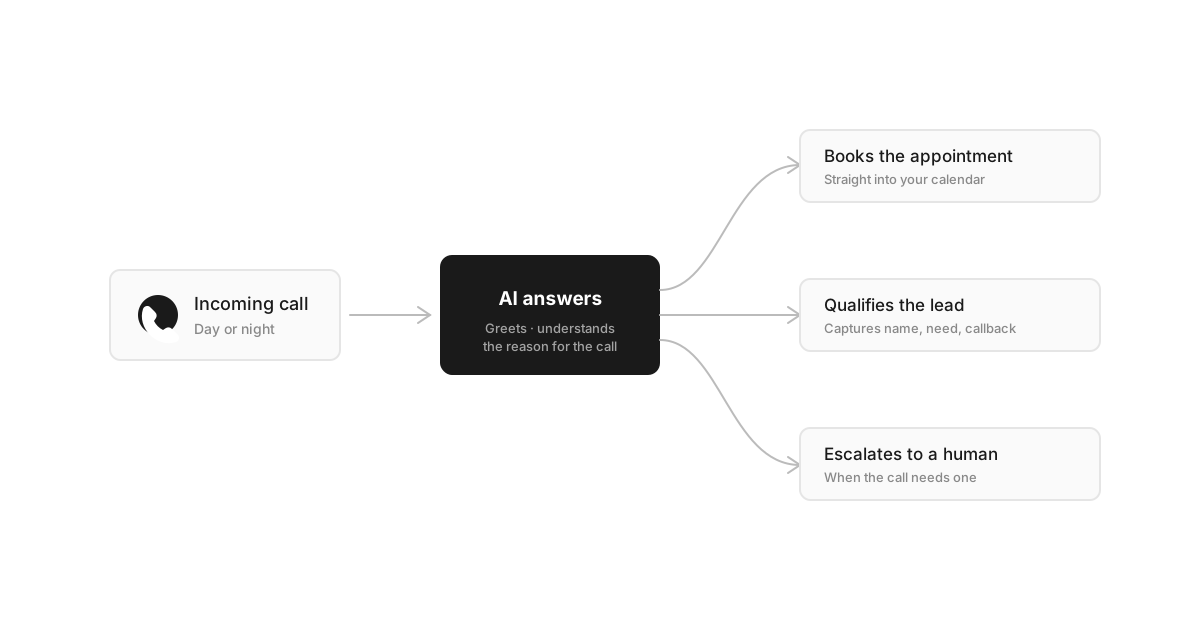
Strip away the marketing and a good service does four concrete things on a call:
- Answers every call instantly, day or night, including the ones that arrive while you're already on another call or standing in someone's kitchen at an open house.
- Captures and qualifies the lead: name, number, the property they're calling about, buyer vs. seller, timeline, and whether they're pre-approved or just browsing.
- Pushes toward a next action, usually booking a showing or a callback at a specific time, instead of leaving the lead floating.
- Hands you a usable summary, texted or dropped into your CRM the moment the call ends, so you can follow up warm instead of replaying a voicemail.
Why real estate is a near-perfect fit for AI
Some industries are awkward for AI receptionists. Real estate is one of the most natural fits, for structural reasons:
- The intake is repetitive. Most first calls ask the same handful of questions about a listing and the same handful back. That predictable core is exactly what AI does well.
- The volume is bursty and after-hours.Calls cluster around new listings, weekends, and evenings, precisely when you're least able to pick up. An AI answers ten at once and never sleeps.
- The job is mobile.Agents live in the car and at properties, not at a desk. A service that fields the phone while you're showing is worth more here than almost anywhere.
Features that actually matter (and what's noise)
Every vendor lists a dozen features. For real estate specifically, these are the ones that decide whether you'll be happy:
Real showing booking, not message-taking
The single highest-value feature. It should read your live calendar, offer real open slots, book the showing, and confirm by text. "We'll pass along your request" is not booking.
Lead qualification you can act on
Buyer or seller, which property, timeline, financing status, and the best callback window. A summary with those five things lets you prioritize. A name and number does not.
CRM and calendar integration
The lead should land in the tool you already work from, automatically. A service that emails you a transcript you then retype is creating work, not removing it.
After-hours and overflow routing
You want to send only the calls you'd otherwise miss (nights, weekends, when you're already on the line) to the service, and keep taking the ones you can. Forwarding your existing number for overflow is the safest way to start.
Live agents vs AI vs hybrid
There are three ways to staff an answering service, and the right one depends on your deal mix. Be honest about which calls you actually get.
Answering service models for real estate
| Model | Best fit | Watch out for |
|---|---|---|
| Live human operators | High-touch luxury, complex deals, agents who rarely miss calls but need backup | Cost (often per-minute), slower pickup at peak, inconsistent scripts across operators |
| AI receptionist | High volume of routine buyer/seller intake, heavy after-hours calls, solo agents and small teams | Weak on negotiation and emotion; needs a clean escalation path for anything non-standard |
| Hybrid (AI first, human backup) | Most growing agents: AI catches everything, a person takes the calls that need one | Slightly more setup; you must define exactly when it hands off |
For most individual agents and small teams, hybrid is the sweet spot: let the AI catch 100% of calls and handle the routine majority, and route the rare high-stakes call to you or a live operator.
What good call handling actually sounds like
The quality of an answering service lives in the script. Here's the shape of two calls worth modeling, kept short on purpose, because long scripts are where AI and tired humans both go wrong.
Buyer inquiry on a listing
Notice the call discloses the AI, qualifies (touring, financing), and ends on a booked showing, not a vague "someone will call you back."
Seller lead
The handoff that follows
The moment either call ends, you should get a one-line summary you can act on: "Buyer, 14 Oak St, pre-approved, booked Sat 11am" or "Seller, primary home, listing in ~60 days, valuation call Fri." That summary is the actual product. Everything before it is plumbing.
Where an AI service still loses (and you should know it)
Against our own commercial interest, here is where an AI answering service is the wrong tool, or a risky one if you're careless:
- Negotiation and high-trust deals. The conversation that wins a luxury listing or saves a wobbling escrow is pure human judgment. AI should hand those off early, not improvise.
- Emotional calls. A seller in a divorce or a probate sale, an anxious first-time buyer: these people want to feel heard by a person. A polite AI is not the same thing, and they can tell.
- Fair-housing risk. This is the one to take seriously. Your AI must stick to factual intake and must never steer callers toward or away from areas based on protected characteristics, or field questions it has no business answering. Under the Fair Housing Act, what your assistant says is your responsibility. Review the script the way you'd review your own words.
- Disclosure and trust.A short "this is an AI assistant" up front is the honest default, and in line with the spirit of the FTC's guidance on clear disclosure. Reputation is your business; don't spend it to hide a robot.
How to set it up without regret
- Start with overflow and after-hours.Forward only missed and out-of-hours calls to the service first. It's pure upside (those were going to voicemail) and lets you judge quality on real calls.
- Wire up the calendar and CRM before you trust it. Confirm two-way booking and that leads land where you work. Test it by calling your own number and booking a showing.
- Write the escalation rule. Decide exactly what triggers a handoff to you (luxury price band, an upset caller, anything off-script) and where it goes.
- Read the first two weeks of transcripts. Find where it stumbled, check it for fair-housing slips, and tighten the script. Treat it like a new assistant in training, not a set-and-forget box.
If most of your calls are routine intake and you're losing leads after hours, the decision is straightforward. You're not replacing your instincts as an agent; you're making sure the phone is always answered so you get the chance to use them. For how to evaluate any provider, see our AI receptionist buyer's guide, compare the cost of the options, then see how our AI receptionist for real estate works, check the setup and pricing, and judge it on your own calls.
Frequently asked questions
What is a real estate answering service?
A real estate answering service answers calls on behalf of an agent or brokerage when they can't, then captures the lead, qualifies it, and either books a showing or hands off a clean message. It can be staffed by live operators, by an AI receptionist, or a hybrid of both. The goal is the same: stop sending buyer and seller inquiries to voicemail, where most of them disappear.
How much does a real estate answering service cost?
AI-based services typically run from roughly $30 to $300 a month depending on call volume; live human answering services usually cost more, often $1 to $3.50 per minute or several hundred dollars a month. The fair comparison for most agents isn't the monthly fee, though. It's the commission on a single deal you'd otherwise lose to voicemail, which dwarfs a year of either service.
Will buyers and sellers know they're talking to an AI?
On a quick inquiry, often not, because modern voices are natural and the call is short. But some callers will notice, and a few dislike it. The honest move is a brief disclosure up front. It costs you almost nothing and protects the trust your reputation runs on, which matters more in real estate than in almost any other business.
Can an AI receptionist book showings directly into my calendar?
A good one can. It checks your real availability, offers open slots, books the showing, and texts you a summary, all on the first call. Confirm two-way calendar sync before you buy. An assistant that only takes a message and asks you to book it manually is a glorified voicemail, not a booking tool.
Is an AI answering service safe for fair housing compliance?
It can be, but it's on you to configure it correctly. The AI should stick to factual intake (timing, financing readiness, contact details) and never steer callers toward or away from neighborhoods based on protected characteristics, or answer questions it shouldn't. Treat its script the way you'd treat your own words on a call, because under the Fair Housing Act, they carry the same responsibility.