
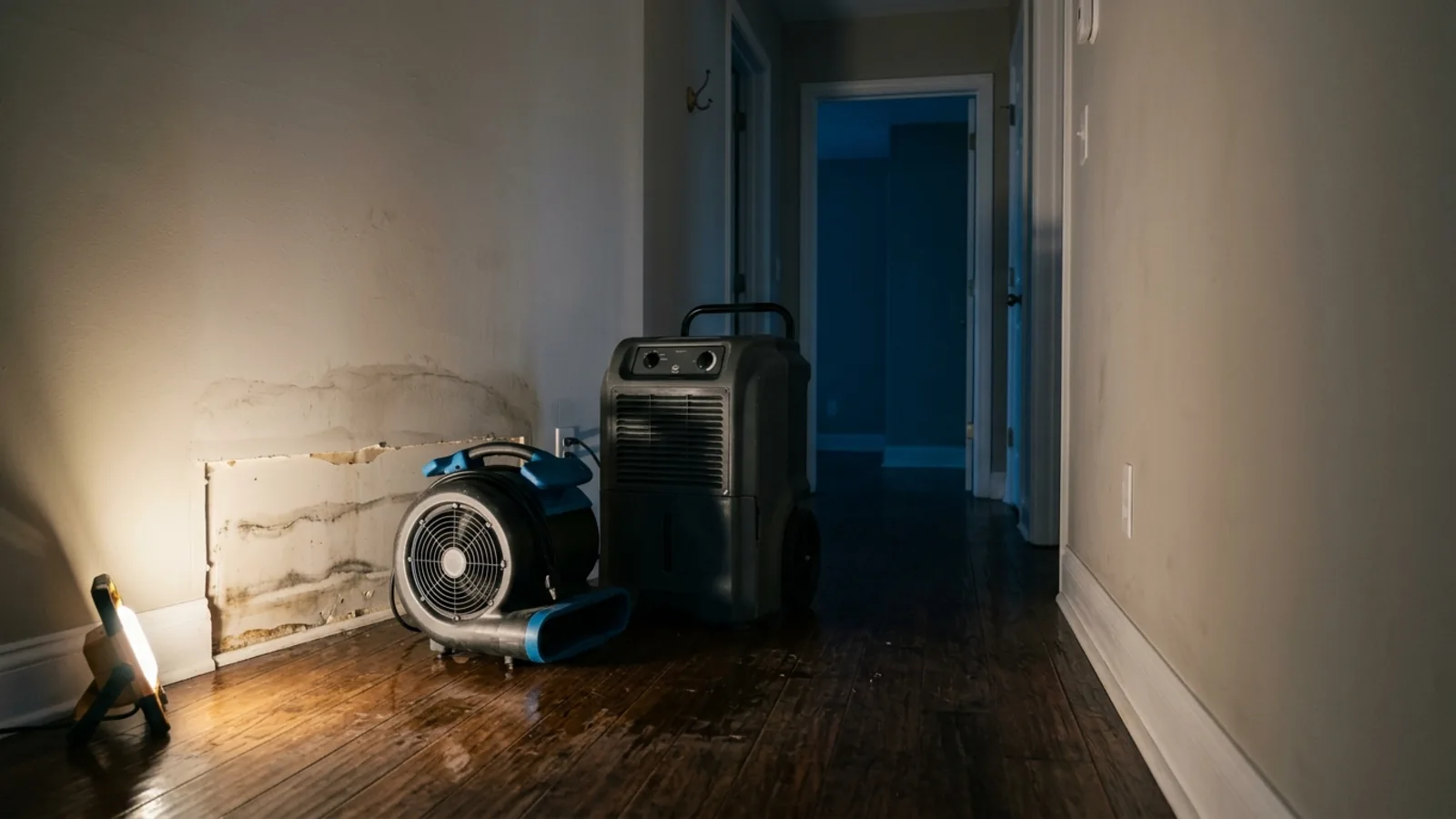
Restoration is the rare trade where the phone call is the sale. Nobody shops three mitigation companies and calls back Thursday - they dial the first result, and if it rings out they dial the second, and whoever picks up is standing in their hallway ninety minutes later with an authorization form. Meanwhile the water is not waiting either. We build the AI kind of answering service, so read this with suspicion: here is what the loss call actually has to capture, the five sentences that must never come out of an automated script, and the parts of this job where a machine has no business at all.
Our articles are still written by humans!
Get human written articles in your Google feed.
The short answer
A restoration answering service covers the emergency line for a water, fire, mold or storm damage company around the clock - nights, weekends, holidays, and the four hours during a freeze event when every phone in the office is already in use. It answers on the first ring, runs a structured loss intake, gives the caller fixed safety instructions where they are warranted, pages the on-call crew and escalates if nobody acknowledges, and logs everything with a recording and a transcript. Live operators can do it, an AI receptionist can do it, and most companies past a certain size end up with a hybrid.
If your emergency volume comes mostly through a plumbing or roofing arm, our plumbing answering service guide and roofing answering service guide cover those call mixes specifically. This one is about mitigation: the call where somebody is looking at water they cannot stop.
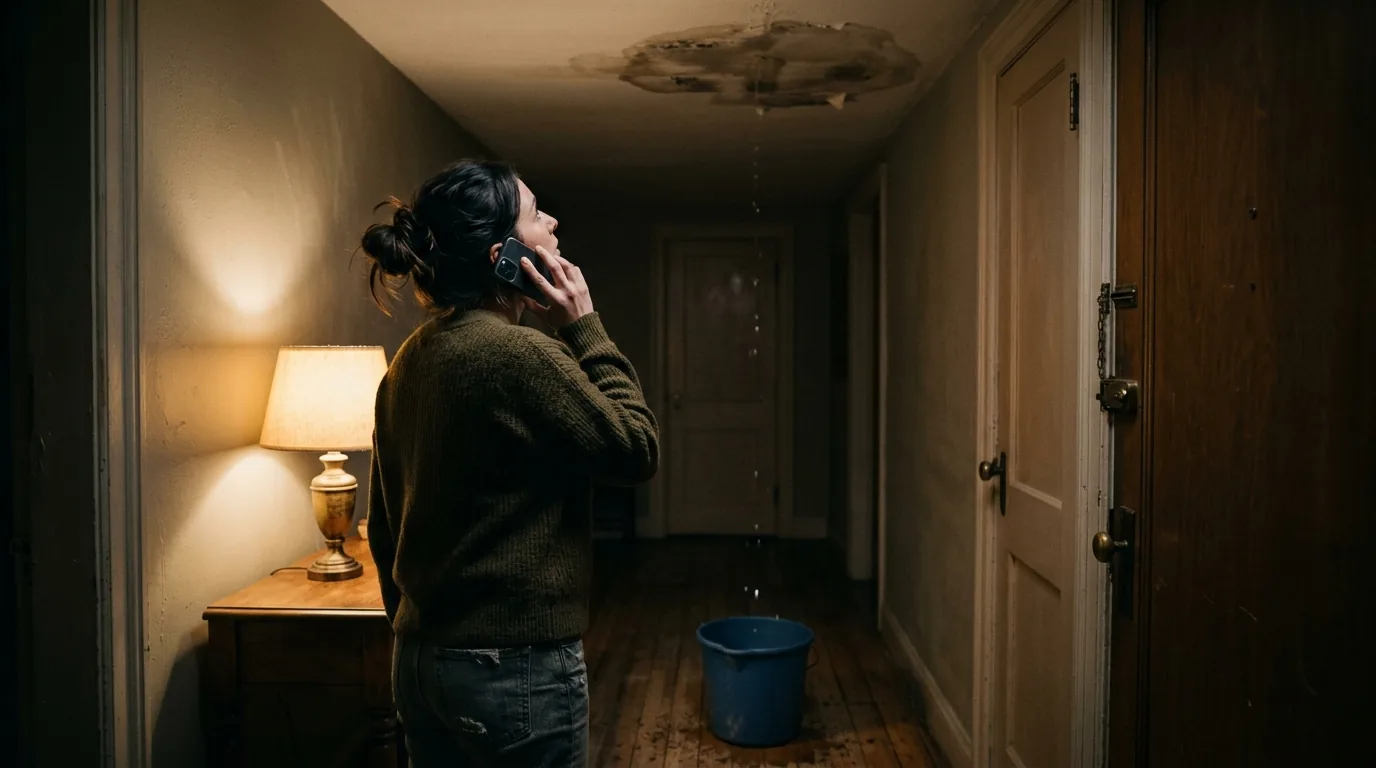
Two clocks are running on every loss call
Most answering service pages make the speed argument in general terms. In restoration it is unusually literal, because two independent things are getting worse while the phone rings.
The caller's clock
A homeowner with water coming through a ceiling is not evaluating vendors. They are dialing whatever the search results gave them and stopping at the first company that answers. The general research on lead response - the Harvard Business Review study on contact rates found the odds of reaching a lead collapsing within the first hour - is an understatement here, because the restoration caller is not going to be reached later at all. They will already have hired someone.
The building's clock
The second clock is physical and it does not care who eventually shows up. The EPA's guidance is blunt: "If wet or damp materials or areas are dried 24-48 hours after a leak or spill happens, in most cases mold will not grow." Restorers work to the ANSI/IICRC S500 standard, which classifies water by contamination category, and clean Category 1 water left sitting in a structure does not stay Category 1 - given time, temperature and the right substrate it picks up contamination and the scope changes with it. How fast depends on conditions, so treat it as a risk curve rather than a countdown. The direction of the curve is never in doubt.
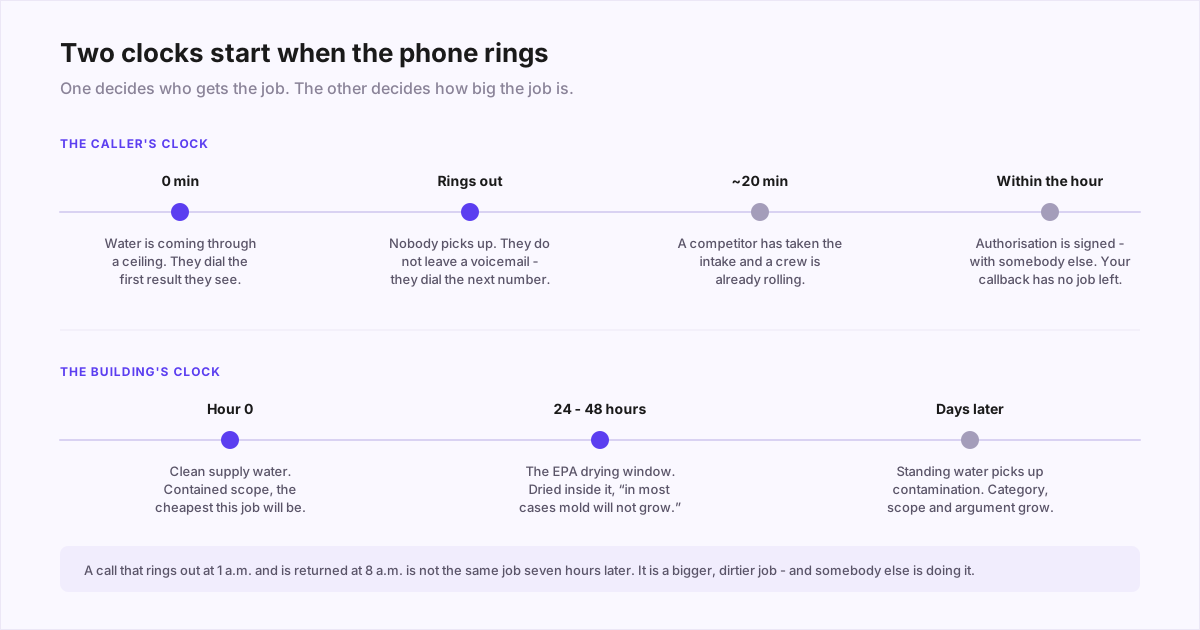
If you want the general version of this arithmetic with your own numbers, we wrote the cost of a missed call and built a calculator for it. Restoration sits at the extreme end of it: high average job value, near zero callback tolerance.
Who actually calls a restoration company
The mistake behind most bad restoration answering setups is treating every inbound call as an emergency. Five different callers use the same number and only one of them should ever wake anybody up.
The call mix on a restoration company's main line
| Caller | What they need | Right handling |
|---|---|---|
| Homeowner with an active loss | Someone on site, and to be told what to do in the next five minutes | Full loss intake, safety instructions, page the on-call crew, confirm an arrival window you can keep |
| Plumber, roofer or property manager referring a job | To hand off a loss they are standing in front of and get back to their own work | Short intake from a pro who already knows the answers, immediate page, and a callback to the referrer - this is the relationship that feeds you |
| Adjuster or TPA assigning a claim | The assignment accepted and the response window acknowledged | Capture carrier, claim number, insured, loss type and promised window; route to the program owner; usually a business-hours callback, not a page |
| Existing job, mid-project | An answer about equipment, drying days, scheduling or the reconstruction phase | Log against the job number and route to the project manager in the morning - almost never an emergency |
| Sales, vendors, subs, marketing | Your money | Captured and filtered - logged for the morning, never a page |
A service that pages the on-call tech for a mid-project drying question is a service your crew will start ignoring within a month - and an ignored page is how you miss the real one. Filtering is not a nice-to-have here; it is what keeps escalation credible. Our note on spam and sales filtering covers the least glamorous version of the same principle.
The intake an estimator can dispatch from
"Water damage at 14 Oak Street, please call back" is not an intake. It is a message, and it forces your tech to re-run the entire conversation from a truck. A dispatchable intake answers the questions that change what gets loaded and who goes:
- Is anyone hurt, and is the water near electricity? First, always. Ceiling water around light fixtures, standing water in a basement with a panel or outlets in it - the script gives a fixed instruction and, when warranted, 911, before anything else.
- What is the source, and is it still running?Supply line, water heater, roof, appliance, sewer backup, sprinkler, storm. "Still running" is the single most important field on the form, and it comes with the next question.
- Can they shut it off? Main shutoff for supply-side losses, breaker for a water heater. Walk them to it if they are able. This is the one piece of genuine help the call itself can deliver.
- What kind of water? Not a category call - the estimator makes that on site - but the caller can tell you if it is clean supply water, washing machine or dishwasher water, or sewage, and the answer changes the PPE and the truck.
- How much, how far, and how many floors? Rooms affected, standing depth, whether it has gone through a ceiling to the floor below, carpet or hardwood or tile, approximate square footage. This decides equipment count.
- Is the power on? Is the building occupied? Plus vulnerable occupants, pets, and whether anyone can stay on site.
- Address, gate and access. Gate codes, apartment or unit number, parking for a box truck, who will meet the crew and on what number. Half the delay in restoration dispatch is finding the door.
- Insurance carrier, claim number, and whether they have filed. Captured as facts, with no opinion attached to them.
- Who can authorize the work?Owner, tenant, property manager, or the HOA for a common-element loss. A tenant cannot authorize demolition in someone else's building, and finding that out on site costs a truck roll.
That is fifteen or so fields captured in three or four minutes, in the same order every time, at any hour. It is the strongest structural argument for a scripted service over a rushed human - not that the script is smarter, but that it does not get tired at 3 a.m. and skip straight to "we'll be right there."
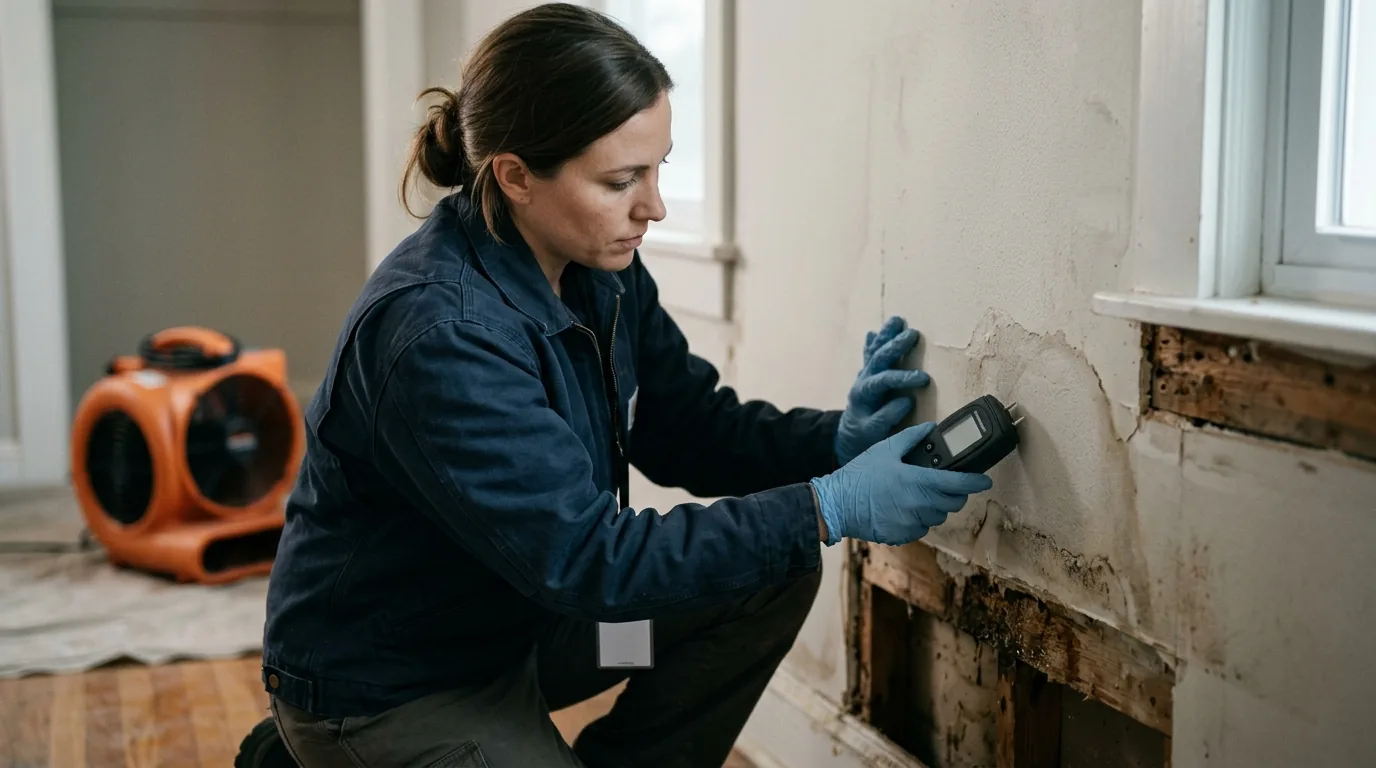
Five sentences the script must never say
This is the section to bring to whichever vendor you are evaluating, AI or human. Every one of these gets said by well-meaning answering services and every one of them costs money later.
- "Your insurance will cover this." Coverage is a carrier decision against a specific policy, and a sentence said on your line becomes the reason a homeowner refuses to pay a deductible. Capture the carrier and the claim number. Say the estimator will walk them through the process.
- "It sounds like the supply line failed / the roofer is liable." Cause and origin is determined on site, and sometimes by someone with credentials your phone answerer does not have. Speculation on a recorded line is a gift to the other side of a subrogation fight.
- "That'll be about three thousand dollars." Mitigation is priced from scope, and scope is not visible over the phone. A number said out loud becomes the ceiling on the invoice.
- "Someone will be there in thirty minutes." Unless the dispatch system knows a crew is free and the drive time is real, an arrival promise is a complaint you have scheduled for yourself. Commit to a window you can keep, or commit to a callback from the tech with a real ETA within a defined number of minutes.
- "That mold won't hurt you." Or the reverse - health reassurance and health alarm are both out of scope. The script acknowledges the concern and hands it to the estimator, who can point at the actual conditions.
None of this is legal advice, and nothing here should be read as a statement about how any particular policy or claim will be handled - your counsel and your carrier relationships govern. Treat it as the brief you hand whichever service you are evaluating: here is the intake, and here are the five places the script stops talking.
Dispatch: the part most services get wrong
Capturing a beautiful intake and dropping it into an inbox at 2 a.m. is theatre. The dispatch chain is the product, and it has four parts worth specifying in writing:
- Page, don't email. A call to the on-call phone that keeps ringing beats a notification, every time.
- Require an acknowledgement. Not a delivered message - an actual confirmation from a human being that they have it. Anything else is a message that was successfully sent to somebody asleep.
- Escalate on a timer. Primary on-call, then a defined wait, then the second name, then the production manager, then the owner. Written down, with the minutes filled in. We covered how to build this chain in the guide to emergency call escalation.
- Tell the caller the truth about what is happening. "I've paged our on-call crew now and they will call you back within fifteen minutes" is a promise you control. "Someone will be right out" is one you do not.
The other reason dispatch decides the vendor: catastrophe volume. A hard freeze or a regional storm does not produce one call, it produces forty in an hour, and a per-minute answering bureau puts them in a queue while your competitors' lines are also busy. Parallel answering is the one capability that matters more in restoration than in almost any other trade, because your revenue is concentrated into exactly the hours when volume spikes.
Live agents vs AI vs hybrid
Answering models for restoration companies
| Model | Best fit | Watch out for |
|---|---|---|
| Live emergency answering bureau | Companies that want a human voice on every distressed call and have the margin for it | Per-minute billing that peaks with catastrophe volume; hold queues during exactly the storm you needed it for; operators who know the script but not your service area |
| AI receptionist | Companies losing after-hours calls and referral handoffs, and anyone whose intake quality varies by who answered | The intake form, safety branches and page-escalation chain must be configured properly; the never-say list has to be explicit |
| Hybrid (AI first, human escalation) | Most established shops - AI answers instantly and takes intake, humans take what needs judgment | Define the always-human list up front: injuries, commercial large-loss, program work, angry existing customers |
| In-house rotation with a cell phone | Owner-operators doing under a handful of losses a month | It works until the night you sleep through it, and it fails silently - nobody reports the call they never knew about |
Cross-market pricing lives in our answering service cost guide; our own flat plans are on the pricing page. You keep the number that is on your trucks either way - forwarding takes about eight minutes.
What good calls sound like
2:14 a.m., homeowner, active loss
7:50 p.m., plumber referring a job
The two questions with fixed answers
"How much is this going to cost?" - "It depends on what the crew finds - how far the water travelled and what it got into. They'll scope it on site and go through the numbers with you before any work starts."
Where AI loses (keep a human here)
- Injury, fire, gas, or electrocution risk. The script gives one instruction - get out, call 911 - and does not run intake. There is no version of this where continuing the form is correct.
- Commercial and large loss. A flooded facility with a business interruption clock and a risk manager on the line needs your most senior person now, not a form. Route it straight through.
- Program and TPA relationships. Assignment terms, response-time compliance and program scorecards are a human relationship. Capture cleanly, escalate to the owner of that account.
- Anything about cause, liability or coverage. Covered above, and worth saying twice because it is the most expensive place an automated script can wander.
- The distressed caller who needs a person. Somebody who has just lost a home to a fire is not an intake problem. The script should recognise it early and hand over.
Setting it up
- Write the emergency definition first. One page: what gets a page tonight, what waits for morning, what is never an emergency. Mid-project questions belong in the third column - that decision alone will save your on-call rotation.
- Build the intake form and make it mandatory. Fifteen fields, fixed order, safety first, no free-text-only messages. Send it to the tech in the page itself, not as a link they have to open in a truck.
- Write the never-say list into the script. Coverage, cause, price, arrival promises, health opinions. Then call in and try to break each one.
- Wire the escalation chain and test it at night. Page, wait, second name, manager. Run it once at 2 a.m. deliberately, before a real freeze does it for you.
- Give the referral sources their own path. Plumbers, roofers and property managers should never sit through a homeowner script. Recognise them, shorten the intake, call them back rather than the homeowner.
- Read the transcripts for two weeks. Every miss is a missing branch. The intake you ship in week one is not the one you will be running in month two, and that is how it should work.
The test for whether you need this is not a hunch. Pull the call log for the last big weather event in your market and count the inbound calls that rang out or went to voicemail. Each one was a loss that somebody else mitigated. If the coverage question is broader than restoration, our after-hours guide and home services page cover the general patterns - and if you want to hear the intake script yourself, the plans are month-to-month.
Frequently asked questions
What is a restoration answering service?
It answers the emergency line for a water, fire, mold or storm damage restoration company 24/7, takes a structured loss intake - source of the water, whether it is still running, how many rooms and floors are affected, whether the power is on, the address and access details, the insurance carrier and claim number if there is one - and then either pages the on-call crew or logs a non-urgent call for the morning. It can be a live answering bureau, an AI receptionist, or a hybrid where AI answers first and escalates to a person.
Why does answering speed matter so much in restoration?
Because two clocks start at the same moment. The homeowner is calling down a list and will hire whoever answers and arrives first, and the water itself is degrading the loss - the EPA's guidance is that materials dried within 24 to 48 hours will in most cases not grow mold, and clean water left standing picks up contamination over the following days. Every hour of ring-out is both a lost job and a worse job for whoever eventually takes it.
How much does a restoration answering service cost?
Live emergency answering bureaus generally bill per minute - roughly $1 to $3 - or per call, which for a company running a real 24/7 line usually lands between $300 and $1,500 a month, and rises in exactly the weeks a storm makes it busiest. AI answering is typically flat, in the $30 to $300 a month range per line, and does not meter or queue when a freeze event puts nine callers on the line at once. Against a single Category 1 mitigation job the monthly fee of either is a rounding error - which is why the decision should be made on intake quality, not price.
Can an answering service dispatch my on-call crew?
Yes, and this is the part worth testing before you sign. A good setup pages the primary on-call tech, waits a defined number of minutes for an acknowledgement, escalates to the second name, then to the production manager, and tells the caller what is actually happening. A weak setup emails a message to an inbox nobody is reading at 2 a.m. Ask any prospective service to demonstrate the unacknowledged-page path, not the happy path.
Should the script tell the caller their insurance will cover the job?
Never. Coverage is decided by the carrier against a specific policy, and a promise made on your phone line at 2 a.m. becomes a deductible argument on invoice day. The correct script captures the carrier, the claim number if one exists, and whether the caller has notified them, then says an estimator will walk them through the process on site. The same rule applies to cause and origin - the phone is not the place to say what failed or who is liable.
Can AI handle a panicked caller standing in water?
For intake, yes - and consistency is its real advantage, because it asks the safety questions in the same order at 2 a.m. as at 2 p.m. and never skips them because the caller is upset. What it should not do is improvise. Any answer involving standing water near electrical outlets, sewage, a gas smell, or an injury gets a fixed safety instruction and, where relevant, 911 - not troubleshooting. And a caller who asks for a person should get one.
What about insurance adjusters and program work?
They are a separate path, and treating them like homeowner emergencies is how companies lose program assignments. An adjuster or third-party administrator calling to assign a loss needs the assignment captured cleanly - carrier, claim number, insured name and address, loss type, and the response window promised - and routed to whoever owns that program relationship, usually with a same-business-hours callback commitment rather than a middle-of-the-night page.