
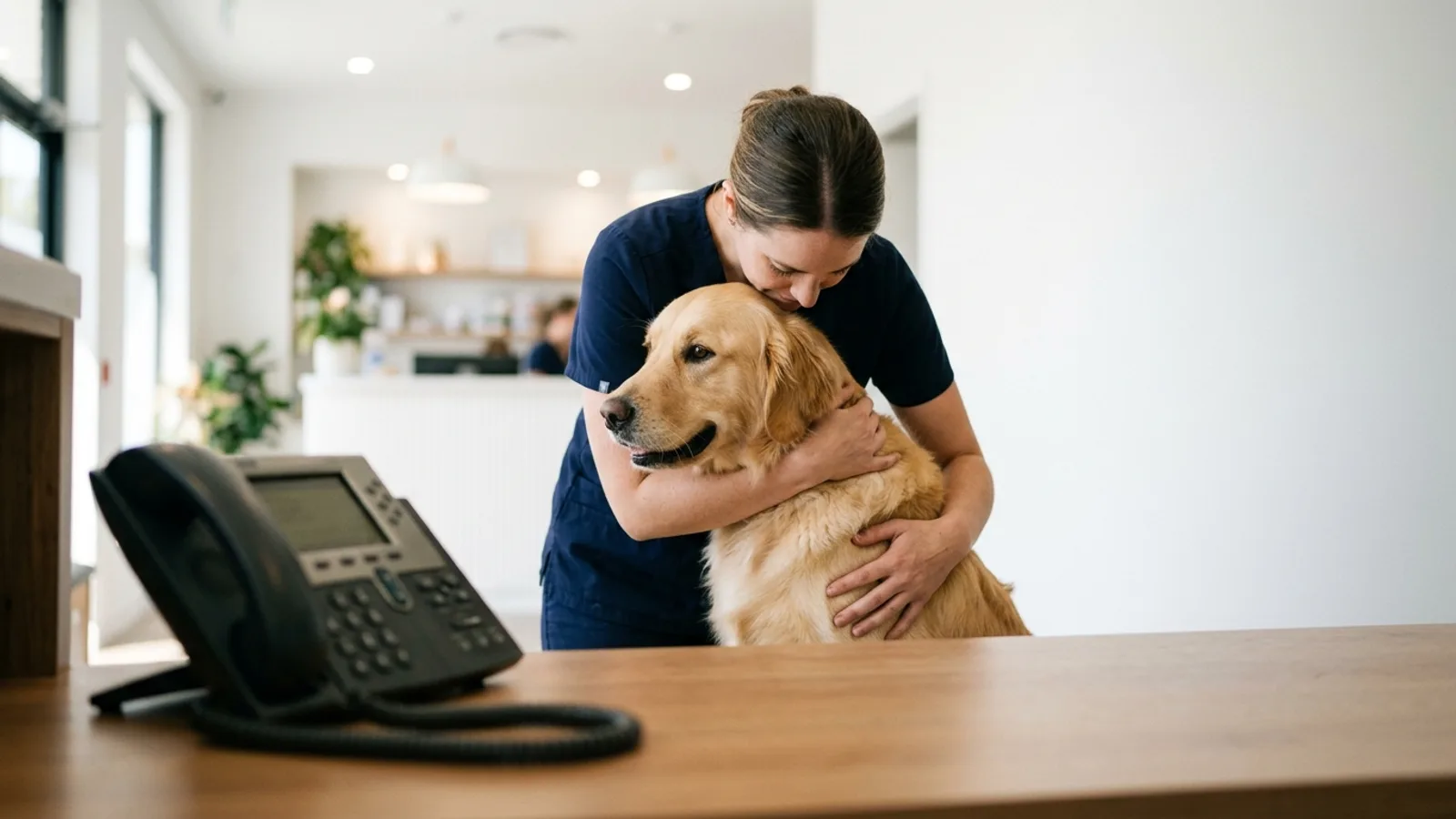
Walk into any small-animal clinic at 9 a.m. and listen: the phone is ringing, both lines. The person answering it is often a credentialed technician who should be in an exam room, and the caller who gives up after six rings books her new puppy's first visit somewhere else. A veterinary answering service exists to take that load - but veterinary phones carry risks that a plumber's don't, and the wrong setup can do real harm. We build the AI kind, so read this skeptically: here's what it should do, the one rule it must never break, and where humans stay irreplaceable.
Our articles are still written by humans!
Get human written articles in your Google feed.
The short answer
A veterinary answering serviceanswers your clinic's phone when your team can't - during the morning crush, over lunch, and after close. It books, reschedules, and confirms appointments against your real schedule, takes refill requests as structured messages for the veterinarian's approval, answers hours-and-directions questions, refers after-hours emergencies to your designated emergency hospital by a script your doctors wrote, and texts your team a summary of every call. It can be live operators, an AI receptionist, or a hybrid - and in every variant, the boundary is the same: no medical advice, ever. For how this pattern works in human healthcare, our medical answering service guide is the companion piece; the dental guide covers the appointment-book economics that vet clinics share.
Why vet clinics miss calls
- The front desk is a bottleneck by design. The same two people checking patients in, taking payments, and comforting a nervous chihuahua are also the phone team. When the lobby is full, the phone loses - it has to.
- Staffing is tight across the profession. The AVMA's workforce analyses describe real strain - high turnover and burnout pressure even where headcounts look adequate on paper. Few practices can simply hire another receptionist to solve phone coverage.
- Call volume clusters at the worst times. Monday mornings, post-holiday, and the hour after school pickup - the times the schedule is fullest are the times the phone rings most.
- New clients don't redial. A new-puppy owner calling three clinics from a list books with whoever answers; the HBR lead-response research pattern - contact odds collapsing within the hour - applies to wellness plans as much as to sales leads. And a vet client, once bonded, is a decade of visits.
The no-medical-advice rule
This is the section that should decide which vendor you allow near your phone line. A veterinary answering service - human bureau or AI - is not a triage nurse. The temptation is real: callers ask "should I be worried?" constantly, and a system that answers questions all day will drift toward answering that one. The configuration has to make drift impossible:
- Capture, don't assess. Species, age, what happened, when it started, what the pet ate if known - gathered precisely, evaluated never.
- Route by your doctors' rules.Your veterinarians define which reported situations get the emergency referral, which get a same-day slot, and which book routinely. The service applies the rules; it doesn't write them.
- Refuse gracefully.The scripted answer to "is this serious?" is honest and kind: "I can't assess that - but I can get you to the people who can, right now." Then it does.
Routing rules for veterinary calls
A starting routing rule set for a small-animal clinic
| Caller says | Classification | What the service does |
|---|---|---|
| Suspected poisoning or toxin exposure | Emergency referral | Emergency hospital info + ASPCA poison control hotline immediately; log and alert the team |
| Hit by car, collapse, trouble breathing, nonstop vomiting | Emergency referral | Designated ER info in the first seconds; capture details; alert on-call per your protocol |
| "Something's off" - lethargy, limping, not eating since yesterday | Same-day routing | Capture details, book the first same-day slot or flag for a staff callback per your rules |
| Wellness visit, vaccines, new puppy or kitten | Booking | Book into the schedule with species, reason, and records-transfer note for new clients |
| Prescription refill | Structured message | Pet name, medication, pharmacy preference - queued for the veterinarian's approval, with a clear 'we'll confirm' promise |
| End-of-life conversation, quality-of-life questions, grief | Human, always | Warm, brief, immediate handoff to your team - no scripting past the handoff |
What it actually does all day
The unglamorous truth about veterinary phones is that the emergencies are rare and the crush is constant. The daily value is transactional:
- Books and reschedules against real availability - by appointment type and doctor, with confirmations by text. (The mechanics are the same as AI appointment booking anywhere; the veterinary wrinkle is attaching species and reason so the right room and time block get used.)
- Absorbs the crush in parallel. Three callers at 9:05 all get answered at once instead of two of them listening to hold music and one hanging up.
- Handles the informational majority - hours, location, whether you take exotics, records requests - without consuming a technician.
- Queues refills cleanly as structured requests rather than voicemails to decipher.
- Reduces no-shows with confirmations and easy rescheduling - an unanswered reschedule call often just becomes a no-show.
After-hours done safely
Most general practices don't see their own emergencies overnight - they refer to an emergency hospital. That makes the after-hours script simple, and simplicity is the point:
- Emergency info first, not last.The designated ER's name, address, and number in the first seconds for any urgent-sounding call - before data collection, not after.
- Poison gets both referrals. The ER, plus the ASPCA Animal Poison Control Center's 24/7 hotline for exposure cases - it exists precisely for the 2 a.m. chocolate-and-xylitol calls.
- Everything else books or messages. Routine requests book for tomorrow; the morning team gets a clean log instead of a voicemail box.
- The morning report. Every after-hours contact summarized before opening: who was referred out, who needs a callback, who booked. Continuity of care starts with knowing who called.
Live agents vs AI vs hybrid
Answering service models for veterinary practices
| Model | Best fit | Watch out for |
|---|---|---|
| Live human operators | Practices that want human warmth on every call and accept the cost | Per-minute pricing; generic operators drift into reassurance ('that's probably fine') - audit their veterinary script as hard as any AI's |
| AI receptionist | High transactional volume - booking, refills, hours - and after-hours referral coverage | The no-advice rule and referral scripts must be configured and tested; grief handoffs must be instant |
| Hybrid (AI first, human backup) | Most clinics: AI absorbs the crush and the night, your team takes anything clinical or emotional | Set handoff triggers generously - when in doubt, a vet clinic should err toward the human |
Whichever you choose, your published number stays the same - forwarding handles it, and the triage rules behind it belong in a written ladder, which we specify in how to set up emergency call escalation. You can compare market pricing in our answering service cost guide or see ours on the pricing page.
What good calls sound like
The 2 a.m. poison call (referral, not triage)
The 9 a.m. crush call (booking)
Where AI loses (and must not compete)
- Clinical judgment - permanently.Not a current limitation that better models will fix, but a boundary: triage belongs to licensed professionals, and the service's design should make crossing it impossible.
- Grief. End-of-life calls, quality-of-life conversations, the caller crying before she finishes a sentence - instantly human, every time, with no efficiency logic applied.
- Difficult clients and billing disputes.These need authority and empathy the front desk has and a script doesn't.
- Disclosure.Pet owners are trusting you with a family member; a plain "this is the clinic's AI assistant" up front is the only honest configuration. Callers usually know anyway.
Setting it up
- Have a veterinarian write the routing rules. The table above is a starting template, but the emergency-referral list and same-day criteria are clinical decisions - they come from your doctors, on paper, before configuration.
- Load the referral infrastructure.Your designated ER's current info, the poison-control hotline, your records and refill policies. Verify the ER details quarterly.
- Start after-hours, then lunch, then the crush. After-hours forwarding replaces a voicemail box - pure upside and a safe trial. Expand to overflow once the transcripts earn it.
- Test the hard calls yourself.Roleplay the poison call, the grief call, and the "is this serious?" call before going live - then re-read transcripts weekly for the first month and tighten wording with your head technician.
The decision test for a practice owner: sit at your own front desk for one Monday morning hour and count - calls missed, holds over two minutes, and technician-minutes spent scheduling instead of caring for patients. Then see how our booking flow handles the same hour, check pricing, and judge it on your own phone line.
Frequently asked questions
What is a veterinary answering service?
A veterinary answering service answers your clinic's phone when the front desk can't - during appointment crush, at lunch, and after hours. It books and reschedules appointments in your practice software or calendar, takes prescription refill requests as structured messages for the vet's approval, refers after-hours emergencies to your designated emergency hospital or on-call doctor, and texts your team a summary of every call. Critically, it never gives medical advice - it routes.
How much does a veterinary answering service cost?
AI-based services generally run about $30 to $300 a month flat; live operator services bill per minute - typically $1 to $3.50 - and land at several hundred a month for a busy clinic. Compare that to the alternative uses of your team: every hour a credentialed technician spends on hold-and-schedule calls is an hour of clinical capacity spent on the phone, and new-client calls that hit voicemail often become new clients of the clinic across town.
Can an answering service give advice about my pet's symptoms?
No - and you should reject any service willing to try. Whether a vomiting dog can wait until morning is a clinical judgment that belongs to a veterinarian or a trained veterinary triage nurse. The correct role for an answering service, human or AI, is capture and route: gather the species, symptoms, and timeline; route by rules your veterinarians wrote; and for anything urgent, send the caller to your designated emergency hospital or on-call doctor without delay.
What happens when someone calls at 2 a.m. about a poisoned pet?
The script your vets configured runs: the caller is immediately given your designated emergency animal hospital's information, and for suspected poisonings, the ASPCA Animal Poison Control Center's 24/7 hotline as well. The service captures what happened and alerts your team so the morning staff knows. What it must never do is speculate about whether the exposure is serious - that call gets routed in seconds, not triaged by a robot.
Can it book into my practice management software?
Ask specifically - this is the make-or-break integration for a clinic. The strongest setups read live availability and write appointments directly into your PIMS or a synced calendar, with appointment type, species, and reason attached. The workable fallback is a shared calendar your front desk reconciles. A service that only takes 'please call back to schedule' messages just moves your phone tag to the morning.
Will pet owners accept talking to an AI?
For booking, rescheduling, refills, and hours questions - overwhelmingly yes, and far more readily than they accept voicemail or a 15-minute hold. For anything emotional - a sick pet, bad news, end-of-life conversations - no, and a well-configured service doesn't try: it discloses it's an AI, handles the transactional call quickly, and hands anything sensitive to your team immediately. Set the handoff rules generously; one mishandled grief call costs more than a hundred well-booked appointments earn.