
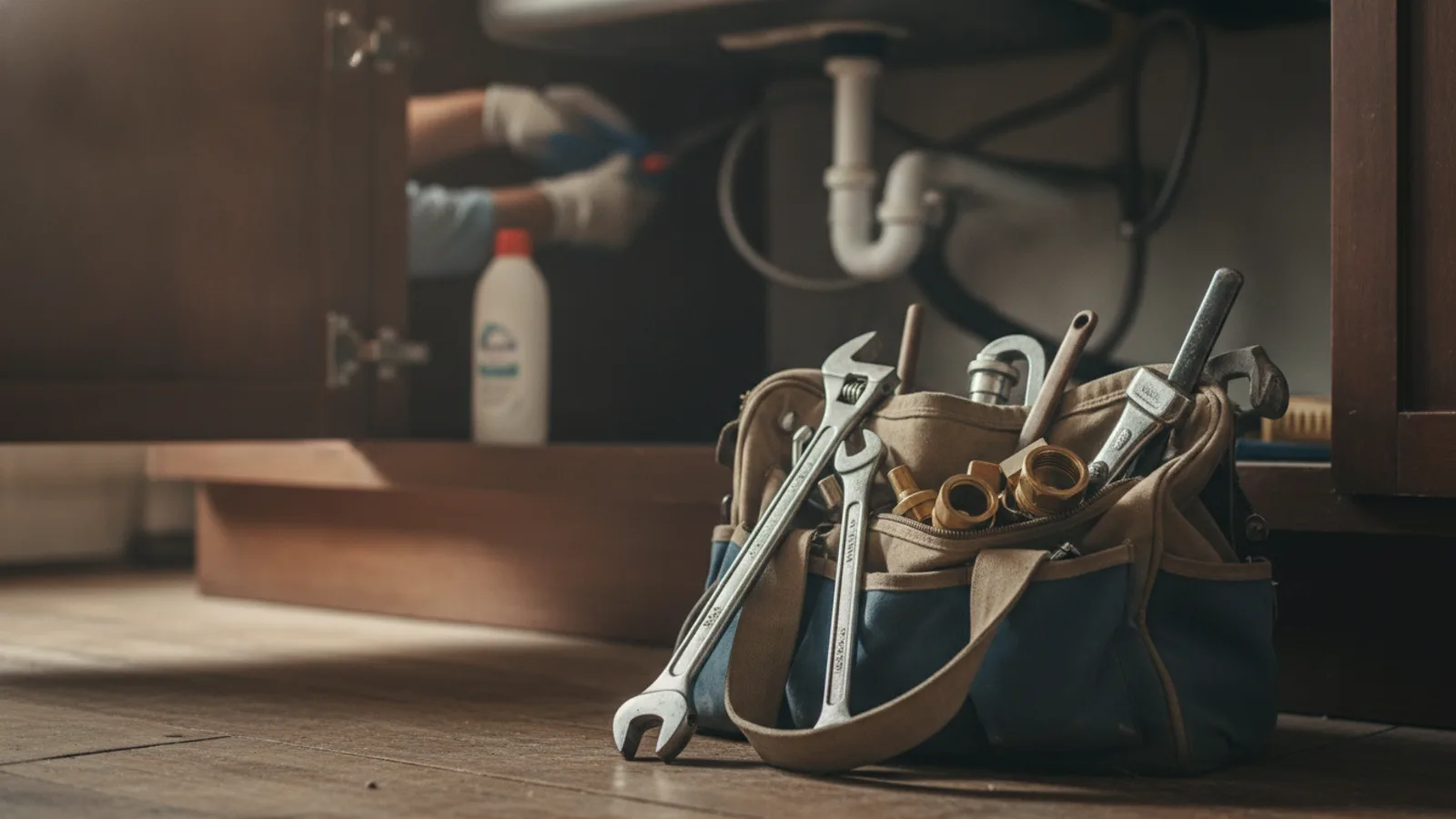
Plumbing has a cruel structural problem: the moments you're most booked are the moments the phone rings most, and the caller with water pouring through the ceiling will not leave a voicemail. She hangs up and dials the next plumber in the search results. A plumbing answering service exists to close exactly that gap. We build the AI kind, so read this skeptically: here's an honest look at what it does well, where it loses to a human, and how to set it up so a 2 a.m. burst pipe reaches you instead of your competitor.
Our articles are still written by humans!
Get human written articles in your Google feed.
The short answer
A plumbing answering serviceanswers your calls when you can't - after hours, mid-job, or during the overflow when two emergencies hit at once. It captures the caller, qualifies the job, sorts a genuine emergency from routine work using your rules, books routine jobs straight into your calendar, pages you for the real emergencies, and texts you a summary you can act on. It can be run by live operators, by an AI receptionist, or a hybrid. For most one-truck shops and small crews, an AI service handles the routine majority around the clock for a flat monthly fee and escalates the rest to a person. This guide is part of our home-services series - the AI receptionist for home services overview covers the trades side by side, and the HVAC answering service guide is the companion piece for heating and cooling. When a burst supply line stops being a plumbing call and becomes a mitigation job, the restoration answering service guide covers that intake. The point is not to replace your judgment or your hands. It's to stop leaking your most profitable calls to voicemail.
Why plumbers miss calls (it's not carelessness)
No trade answers its own phone worse than plumbing, and it's not a character flaw - it's physics. The job itself makes you unreachable:
- You're on a job, and the job owns your hands. You're under a sink with both arms in a cabinet, soldering a joint, or holding back water with a wrench. Even if you hear the phone, answering it means stopping billable work - and dripping on a customer's floor while you talk.
- Emergencies keep anti-business hours. Water heaters fail at night, pipes freeze and split in the small hours of a cold snap, and sewage backs up on Sunday. The calls with the highest ticket arrive precisely when the office - if you have one - is closed.
- Calls cluster.A hard freeze doesn't burst one pipe in town; it bursts fifty. The same event that fills your schedule floods your phone line, so the busier you are, the more calls you miss.
- And the caller doesn't wait.A homeowner watching water spread across the kitchen floor calls the next plumber the moment your voicemail greeting starts. She isn't being disloyal. She has an emergency, and you didn't answer.
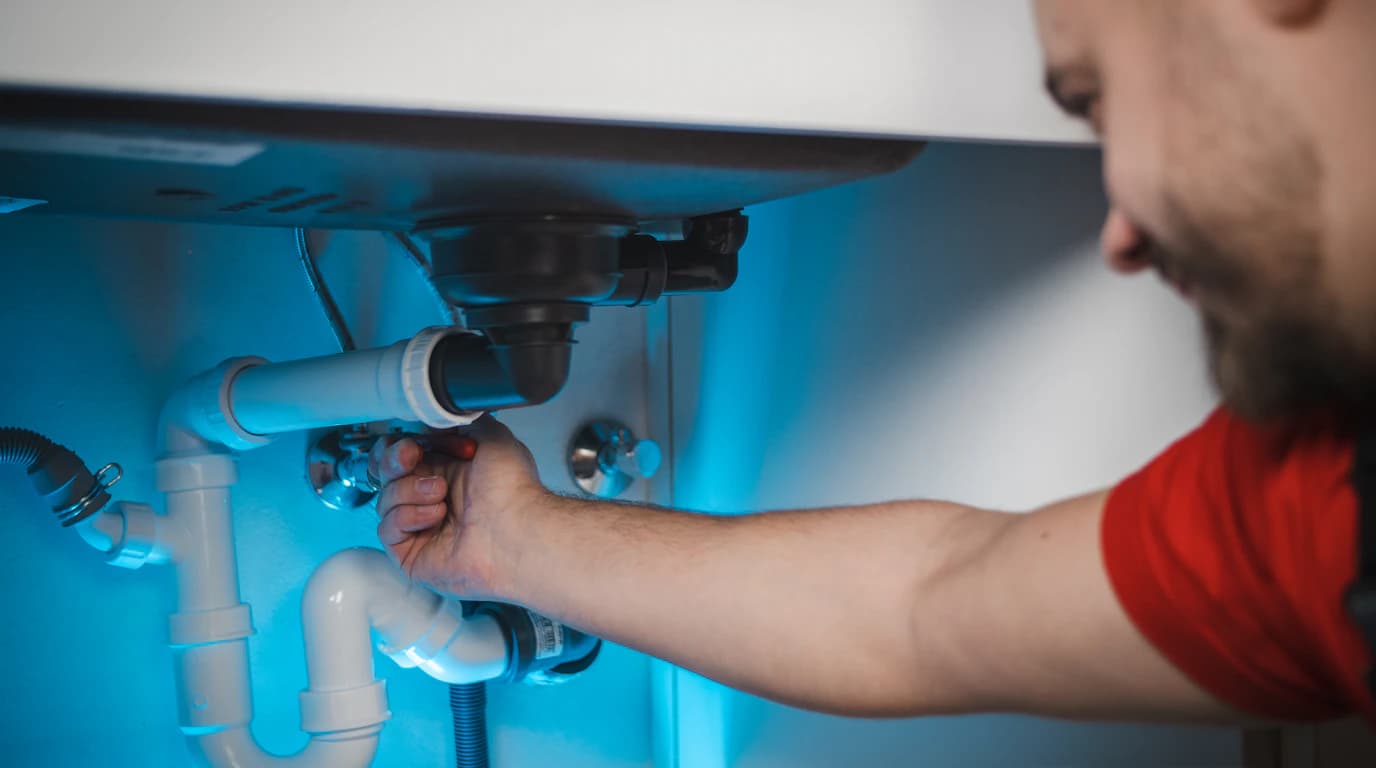
The Harvard Business Review research on lead response time found that the odds of reaching a lead collapse within the first hour. For an emergency plumbing call, the window isn't an hour - it's the length of one voicemail greeting.
What a missed emergency call costs
Emergency work is the highest-ticket work in plumbing. A conservative range for a single emergency job - a burst supply line, a failed water heater, a main-line clog with sewage coming up the basement drain - runs $300 to $800, and often well past that once after-hours rates and follow-on repairs are included. Water damage is also one of the most common and expensive homeowner insurance claims, per the Insurance Information Institute's claims data, which is why the homeowner is frantic and why she books with whoever answers.
Miss two of those calls a month and you've lost more than a year of any answering service costs - before counting the repeat work, repipe quotes, and referrals that an emergency customer becomes. And the misses are invisible: a caller who hangs up on your voicemail leaves no record, so most shops badly underestimate the leak. We've put fuller numbers on this in the cost of a missed call; the short version is that in the trades, the answering setup is a revenue decision, not an office-supplies decision. What separates a service that captures those calls from one that fumbles them is the escalation ladder behind it - how to set it up so someone actually wakes.
What a plumbing answering service actually does
Strip the marketing and a good service does five concrete things on every call:
- Answers instantly, every time- at 2 a.m., on Sunday, and on the third simultaneous call during a freeze, when your one line would be busy.
- Qualifies the job: name, service address, callback number, what's happening, whether the water is contained or spreading, whether they're an existing customer.
- Triages emergency vs routine using rules you wrote: burst pipe now versus faucet drip tomorrow. This is the feature the whole purchase hangs on - more on it below.
- Books into your real calendar: reads live availability from your calendar or field-service software, offers the caller actual slots, and confirms during the call. For emergencies, it pages you or your on-call tech instead.
- Texts you a summary the moment the call ends: "Burst pipe, 14 Oak St, water shut off at main, paged on-call - urgent" or "Water heater quote, existing customer, booked Tue 9-11." That summary is the actual product; everything before it is, well, plumbing.
Emergency triage rules that matter
The difference between a plumbing answering service that earns its keep and one that annoys everyone is whether it sorts calls the way you would. Write the rules explicitly - don't accept a vendor's defaults. A sane starting rule set:
A starting triage rule set for plumbing calls
| Caller says | Classification | What the service does |
|---|---|---|
| Burst pipe, water actively flowing or spreading | Emergency | Walk them to the main shutoff valve, then page the on-call plumber immediately |
| Sewage backing up into the home | Emergency | Page on-call now - health hazard, damage compounds by the hour |
| No water in the house | Emergency (fast escalation) | Page on-call; a household without water doesn't wait until morning |
| Water heater dead - no hot water | Urgent, same-day | Book the first slot today or tomorrow morning; flag if leaking |
| Dripping faucet, running toilet, slow drain | Routine | Book the next open slot; capture details so the tech arrives prepared |
| Quote request, remodel, fixture install | Sales | Qualify the job, book an estimate visit, tag it as a sales lead |
Two design rules make this work in practice. First, fail toward escalation: when a call is ambiguous between routine and emergency, page the human - a false alarm costs minutes, the opposite mistake costs a flooded house and a review that says you didn't come. Second, have the service ask the one question that changes everything: "Is the water still running, and do you know where your main shutoff is?" Walking a panicked caller to the shutoff valve is the single most valuable thing anyone - human or AI - can do in the first sixty seconds. (The routine end of the spectrum matters too: the EPA's WaterSense program estimates household leaks waste nearly a trillion gallons a year, which is a polite way of saying dripping-faucet calls are steady, bookable, bread-and-butter work - just never at 2 a.m. priority.)
Live agents vs AI vs hybrid
There are three ways to staff an answering service for plumbers, and the right one depends on your call mix and how bad your worst week gets.
Answering service models for plumbing companies
| Model | Best fit | Watch out for |
|---|---|---|
| Live human operators | Shops that want a person on every call and have steady, predictable volume | Per-minute pricing spikes exactly when a freeze floods the line; generic operators who can't tell a burst pipe from a drip; hold queues when calls cluster |
| AI receptionist | Heavy after-hours and overflow volume, routine booking, one-truck shops with nobody at a desk | Must be configured with your triage rules and shutoff-valve script; needs a clean escalation path for anything non-standard |
| Hybrid (AI first, human backup) | Most growing plumbing companies: AI catches 100% of calls, a person takes the ones that need one | Slightly more setup; you must define exactly what triggers a handoff and who gets paged |
For most residential plumbing shops the hybrid shape wins: the AI answers everything, finishes the routine majority, and pages a human for real emergencies and delicate calls. You can compare what each model costs on our pricing page and see how we've configured this for the trades on the home services page.
What good calls sound like
The quality of any answering service lives in the script, so here's the shape of the two calls that matter most - kept short, because long scripts are where AI and tired humans both go wrong.
The 2 a.m. burst pipe (escalation)
Notice what happened: the AI disclosed itself, stopped the damage first, captured the essentials, and ended on a paged plumber with a concrete callback promise - not "someone will get back to you."
The routine water-heater quote (booking)
No drama, no page, nobody woken up - just a qualified, booked job waiting in the calendar when you check your phone over coffee.
Where AI loses (and you should know it going in)
Against our own commercial interest, here is where an AI plumbing answering service is the wrong tool:
- Price haggling."The other guy said $250" is a negotiation, and negotiations need authority the AI doesn't have and shouldn't fake. Configure it to hold the line politely - trip fee and honest ranges only - and hand pricing conversations to you. An AI that improvises discounts is a liability.
- Complex diagnostics over the phone.Whether a pressure problem is a failing regulator, a slab leak, or a municipal issue is a judgment call built on years under houses. The AI's job is to capture the symptoms accurately and get the right plumber to the door - not to play plumber.
- Furious customers. A callback dispute or a flooded-anyway customer wants to feel heard by a person, and they can tell the difference. These calls should hand off early, by rule.
- Disclosure.A short "this is an AI assistant" up front is the honest default. Your name is on the truck; don't spend your reputation hiding a robot.
Setup: one-truck shop vs multi-tech operation
The rollout differs more by shop size than vendors admit, so here's each path honestly.
One-truck shop
- Forward everything you already miss. Set your mobile to forward on no-answer and after hours. You lose nothing - those calls were hitting voicemail - and you keep answering when your hands are free.
- Write your triage rules in ten minutes. The table above is the template: what pages you at night, what books for morning, and the shutoff-valve script for active leaks.
- Connect the calendar you actually use.Google Calendar or Jobber is plenty. The test is simple: call your own number, book a fake faucet repair, and confirm it lands where you'll see it.
- Read your first week of transcripts. Tighten anything it fumbled. Fifteen minutes on a Sunday, and the script gets noticeably better.
Multi-tech operation
- Map the on-call rotation first. The service needs to know who gets paged this week, and the schedule must update without a phone call to the vendor - ask exactly how rotation changes work before signing.
- Integrate field-service software, not just a calendar. Jobs should land in ServiceTitan, Housecall Pro, or Jobber with the customer record attached, so dispatch works from clean data instead of retyping texts.
- Split routing by call type.Emergencies page on-call; routine work books against the right tech's zone and skills; sales leads get tagged for the estimator. This is where the triage rules earn real money.
- Run it as overflow first, then after-hours, then always-on. Let it prove itself on the calls your CSR already can't reach before it fronts the main line. Judge it on transcripts and booked jobs, not the demo.
Either way, the decision test is the same one from the top of this guide: if emergency calls are reaching voicemail at night and during freezes, you already know what each miss costs. See how our AI receptionist works for home-services businesses, check pricing, and judge it on your own calls.
Frequently asked questions
What is a plumbing answering service?
A plumbing answering service answers your phone when you can't - while you're under a sink, after hours, or when two calls hit at once. It captures the caller's details, sorts a genuine emergency like a burst pipe from a routine job like a dripping faucet, books the work into your schedule or pages you for urgent calls, and sends a text summary. It can be staffed by live operators, an AI receptionist, or a hybrid of both.
How much does a plumbing answering service cost?
AI-based services generally run about $30 to $300 a month depending on call volume. Live human answering services usually bill per minute - often $1 to $3.50 - or several hundred dollars a month, and per-minute pricing climbs fast in a cold snap when pipes burst everywhere at once. The honest math isn't the fee, though: one captured emergency job at $300 to $800 or more typically covers months of either option.
Can an AI answering service tell a real plumbing emergency from a routine call?
Yes, if you configure the rules - it doesn't guess, it applies your definitions. You tell it that a burst pipe, sewage backup, or no water in the house means page the on-call plumber now, and that a dripping faucet or slow drain books for the next open slot. It then applies those rules identically on every call, at 2 p.m. or 2 a.m. Ambiguous calls should be set to fail toward escalation.
Can it book jobs into my calendar?
A good one can, and this is the feature to verify before you buy. Connected to your calendar or field-service software - Jobber, Housecall Pro, ServiceTitan, or a plain shared calendar - it reads real availability, offers the caller actual slots, books the job during the call, and sends a confirmation text. A service that only takes messages and asks you to call everyone back is a voicemail with better manners.
Will customers hang up on an AI?
Some will - fewer than you'd expect, and far fewer than hang up on voicemail, which is the real alternative at 2 a.m. A homeowner standing in rising water mostly wants two things: an instant answer and confidence that help is moving. A good AI discloses what it is, answers on the first ring, and ends the call with a plumber paged or a job booked. Judge it on your own transcripts during a trial, not on the demo.
Do I still need an answering service if I have an office manager?
During business hours, maybe not - a good office manager beats any service. But your office manager goes home at five, and burst pipes cluster at night, on weekends, and during cold snaps. Most shops start by forwarding only after-hours, weekend, and overflow calls, which is pure upside: those calls were going to voicemail anyway. The service covers the 70 percent of the week your office is closed.
Sources
- Harvard Business Review: The Short Life of Online Sales Leads (lead response-time research)
- EPA WaterSense: Fix a Leak Week - household leaks waste nearly 1 trillion gallons of water annually
- Insurance Information Institute: Facts + Statistics on homeowners insurance claims, including water damage and freezing